PPF · 7 min read
How long does PPF last? PPF maintenance, care and removal guide
How long PPF lasts and the PPF maintenance routine that keeps it clear: washing, self-healing, coatings, yellowing, and safe removal with adhesive remover.
Short answer: Quality TPU paint protection film typically lasts many years, often in the range of 5 to 10, depending on film grade, climate and care. Good PPF maintenance means gentle hand washing, keeping pressure washers off the edges, avoiding harsh solvents, and occasional warmth to let the self-healing top coat recover from light scratches.
PPF maintenance is simple, but it makes a big difference to how long paint protection film looks clear and keeps protecting the paint. This guide explains how long PPF typically lasts, what shortens its life, the washing and care routine installers should hand to customers, and how to remove old film and clean up adhesive safely. It is written for detailers, PPF installers and owners who have just had film fitted.
Key takeaways
- Quality TPU PPF typically lasts many years, often around 5 to 10, with real life depending on film grade, sun exposure and care.
- Wait roughly a week after installation before washing, and do not touch or pick at edges while the adhesive settles.
- Hand wash with a pH-neutral shampoo; keep pressure-washer nozzles away from film edges.
- Self-healing top coats recover from light swirls with warmth from the sun, warm water or gentle heat.
- Old PPF is removed with gentle heat and slow peeling; leftover glue is cleaned with a film-safe PPF adhesive remover.
How long does PPF last?
Modern thermoplastic polyurethane (TPU) films are much more durable than the older films that gave "clear bras" a reputation for turning yellow. Leading PPF products typically carry multi-year manufacturer warranties against yellowing, cracking and delamination; check the specific warranty for the film on your car.
What affects PPF lifespan:
| Factor | Longer life | Shorter life |
|---|---|---|
| Film grade | Quality TPU with a stable top coat | Economy films, older PVC-based films |
| Sun exposure | Garaged, mild climate | Parked outside in strong sun and heat |
| Panel position | Vertical panels (doors, bumpers) | Horizontal panels (hood, roof) |
| Washing | Gentle hand washing | Brush washes, pressure washer on edges |
| Contaminants | Removed promptly | Bird droppings, sap, fuel left to bake |
| Installation | Clean prep, wrapped or sealed edges | Contaminated surface, stretched edges |
Hoods and roofs face the most UV, so they usually show age first. Front bumpers take the most stone impacts; a deep chip can puncture the film, and that section may need replacing before the rest of the car.
PPF maintenance after installation
The first days matter most, because the adhesive is still bonding and some moisture from the wet install is still evaporating.
- Do not wash for about a week. Follow the installer's instructions; some recommend longer in cold weather.
- Ignore small haze or water pockets. Small hazy spots or moisture bubbles often clear on their own over several days to a few weeks as the moisture evaporates through the film.
- Do not pick at edges. If an edge looks lifted, ask the installer to check it rather than pressing it down yourself.
- Park in the sun if you can. Warmth can help remaining moisture dry out and helps the film settle.
How to wash a car with PPF
Regular washing keeps dirt from grinding into the top coat and lets you spot problems early.
- Use the two-bucket method with a pH-neutral car shampoo and a clean microfiber or wool mitt.
- Rinse first to remove loose grit before touching the surface.
- Keep pressure washers back. Hold the nozzle well away from the surface and never aim it straight at edges or seams, which can lift the film.
- Avoid brush-type automatic washes. Touchless washes are less risky, but hand washing is best.
- Dry with a soft microfiber towel or filtered air. Pat rather than drag across edges.
- Clean contaminants promptly. Bird droppings, bug splatter, tree sap and fuel can stain the top coat if left to bake in the sun.
Products to avoid on PPF
- Abrasive polishes and compounds, unless the film maker approves a specific product.
- Strong solvents, such as undiluted degreasers or tar removers not labeled safe for film.
- Waxes containing dyes or heavy petroleum distillates, which can leave residue at edges and contribute to discoloration over time.
- On matte or satin PPF, any product that adds gloss.
Self-healing: how it works and how to help it
Most quality PPF has an elastomeric top coat that flows back into shape when warmed, so light swirls and fine scratches disappear. This is why owners often see marks vanish after the car sits in the sun.
- Sun: often enough for light wash marks.
- Warm water: pouring warm (not boiling) water over a mark can help.
- Heat gun: installers sometimes use gentle, moving heat. Keep the gun moving and follow the film's guidance, since too much heat can damage film and paint.
Self-healing has limits. It repairs the top coat, not cuts or punctures that go through the film.
Can you put a ceramic coating over PPF?
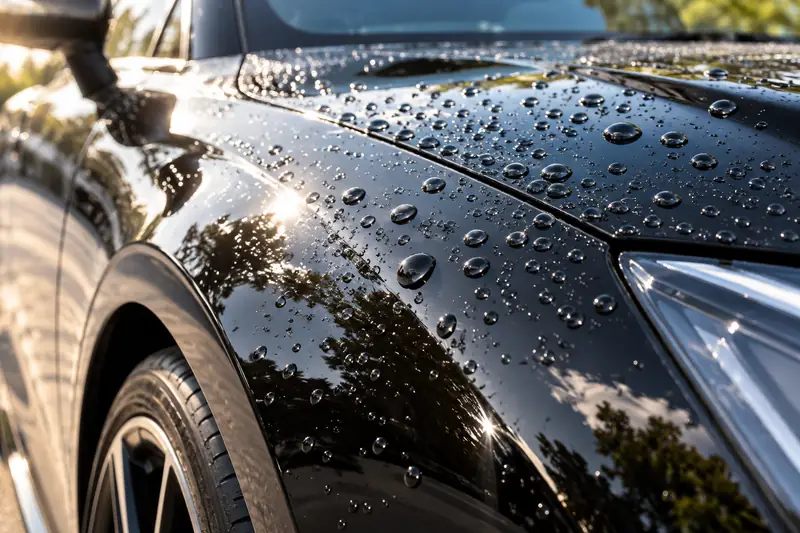
Yes. Many owners add a ceramic coating designed for PPF or for both paint and film. It makes the surface more hydrophobic and easier to clean and can help resist staining. Use a coating the maker says is compatible with PPF, and apply it after the film has fully settled. Our PPF vs ceramic coating comparison explains how the two work together.
Why does PPF turn yellow, and can you fix it?
Yellowing in modern TPU film is usually linked to a combination of UV exposure, heat and contamination, such as staining from fuel, harsh chemicals or road film baked into the surface. Older or lower-grade films are more prone to it. Light surface staining can sometimes be improved with a film-safe cleaner. Genuine yellowing within the film itself cannot be reversed; the panel needs new film.
To reduce the risk:
- Choose a quality TPU film from a reputable supplier.
- Park in the shade or a garage where possible.
- Clean contaminants quickly and avoid harsh chemicals.
- Consider a compatible coating as an extra barrier.
PPF removal and PPF adhesive remover
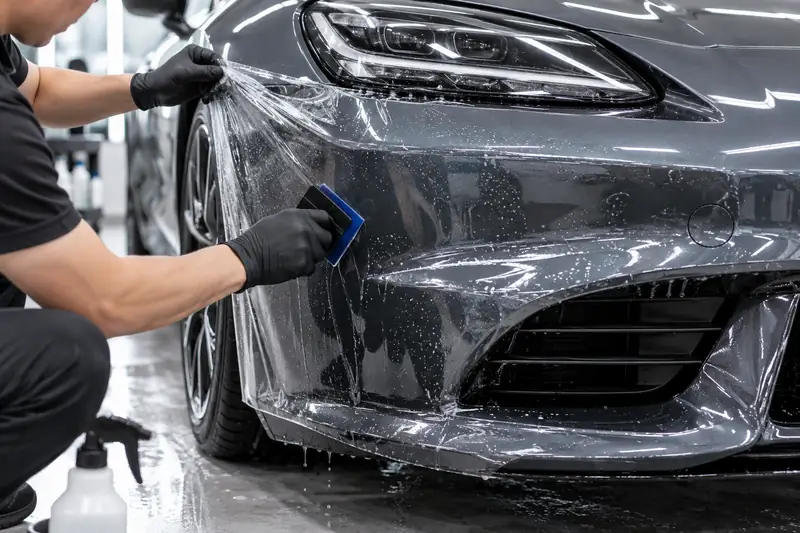
When film reaches the end of its life or is damaged, it can be removed and replaced. Removal is best done by a professional, but the process is straightforward.
- Warm the film. Use a heat gun or steamer on low settings to soften the adhesive. Do not overheat the paint.
- Lift a corner. Use a plastic razor or fingernail, never a metal blade on paint.
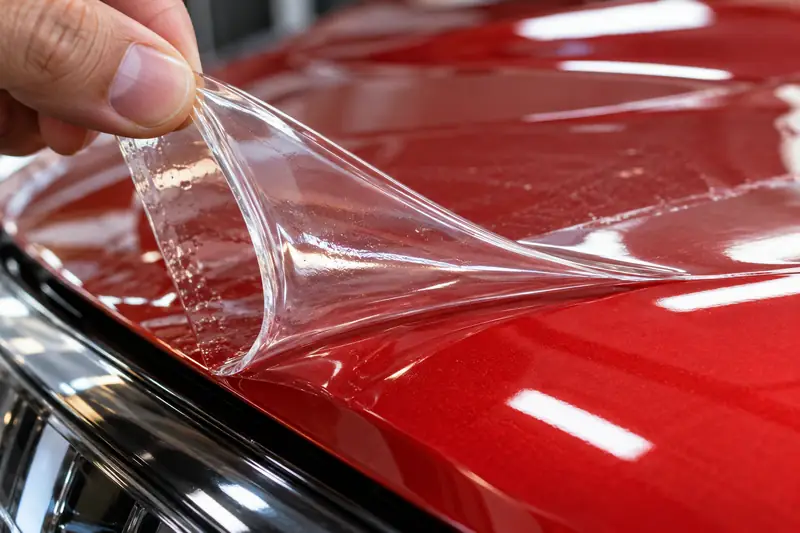
- Peel slowly at a low angle. Pull the film back on itself, close to the surface, and keep warming ahead of the peel.
- Clean residue. Apply a PPF adhesive remover or film-safe adhesive remover to any leftover glue, let it dwell as directed, then wipe with a microfiber towel.
- Wash and inspect. Wash the panel, then check the paint before fitting new film.
Choose an adhesive remover that says it is safe on automotive clear coat, and test it in a small hidden area first. Citrus-based and solvent-based removers both exist; follow the label and avoid aggressive solvents on fresh or resprayed paint. Old, sun-baked film tends to tear into small pieces and leave more adhesive behind, which is one reason to replace film before it reaches the end of its life.
For installers: setting up customers for long PPF life
A short written care sheet reduces callbacks. Include the no-wash period, the washing method, products to avoid, how self-healing works, and when to return for an edge check. Fitting film that is clear and consistent from roll to roll helps too. Mars Decorative Film batch-numbers and inspects every roll of clear TPU PPF and color PPF, and shops can request free samples to test clarity and self-healing on a panel. For pricing context, see how much PPF costs.
Frequently asked questions
How long does PPF last on a car?
Quality TPU paint protection film typically lasts many years, often around 5 to 10, depending on the film grade, climate and how the car is cared for. Horizontal panels such as the hood age faster than vertical panels. Check the manufacturer's warranty for your specific film.
How soon can I wash my car after PPF installation?
Most installers recommend waiting about a week before the first wash, so the adhesive can bond and moisture from the wet install can evaporate. In cold or humid weather it may take longer. Follow your installer's instructions.
What is the best way to remove PPF adhesive?
Warm any remaining adhesive gently, then apply a PPF adhesive remover that is labeled safe for automotive clear coat. Let it dwell as directed and wipe it away with a soft microfiber towel. Test on a small hidden area first.
Can I polish or wax PPF?
Avoid abrasive polishes unless the film maker approves them, because they can damage the top coat. Many owners use a PPF-compatible sealant or ceramic coating instead of traditional wax. On matte or satin PPF, use only matte-safe products.
Why are there bubbles under my new PPF?
Small hazy spots or moisture pockets after a wet install are normal and usually clear as the moisture evaporates over the following days or weeks. Bubbles with dirt or air trapped under them, or bubbles that grow, should be checked by the installer.
Does PPF need to be replaced?
Eventually, yes. When film is damaged, yellowed or near the end of its rated life, it should be removed and replaced to protect the paint and to make removal easier. Replacing only the most-exposed panels, such as the hood and bumper, is common.