PPF · 6 min read
Windshield protection film: does it stop rock chips and what it costs
Windshield protection film explained: how clear exterior film guards glass from rock chips, how it differs from paint PPF, typical cost and lifespan.
Short answer: Windshield protection film is a clear, optically graded film applied to the outside of the windshield to absorb small stone impacts and resist pitting. It reduces chips and cracks from road debris but does not make glass unbreakable. Installed prices typically run roughly $250–900, and the film is a wear item replaced every year or few years.
Windshield protection film answers a question many drivers ask after their second chip repair: is there a windshield protector that actually works? There is. A thin, clear film on the outside of the glass takes the small stone hits that would otherwise pit or crack the windshield. This guide explains how windshield PPF works, how it differs from regular paint protection film, what it costs and where it makes sense, for both car owners and the shops thinking of offering it.
Key takeaways
- Windshield protection film is an exterior, optically clear film designed specifically for glass; it is not the same product as paint PPF.
- It reduces chips, pitting and small cracks from road debris, but a large rock or a heavy impact can still break the glass.
- Typical installed price is roughly $250–900, depending on the film, vehicle and region.
- Wipers wear the surface, so windshield film is usually treated as a replaceable layer, often renewed every year or few years.
- Clear films must keep the driver's view undistorted, and rules on windshield films vary by country and state; check local regulations.
Is there a windshield protector?
Yes. Several kinds of products are sold as a "car windshield protector," and they do very different jobs:
| Product | What it does | Protects from rock chips? |
|---|---|---|
| Windshield protection film (exterior) | Clear film that absorbs and spreads small impacts | Yes, against small debris |
| Glass coating ("windshield protection coating") | Thin hydrophobic layer that sheds water | No, it mainly improves rain visibility |
| Interior tint or heat film | Reduces heat and UV inside the cabin (where legal) | No |
| Windshield cover or sunshade | Fabric or foil cover for parked cars | No, only frost, sun and debris when parked |
When customers ask for windshield protection for rocks, the first product is the one they need. A coating makes rain bead off but adds no impact protection.
How windshield protection film works
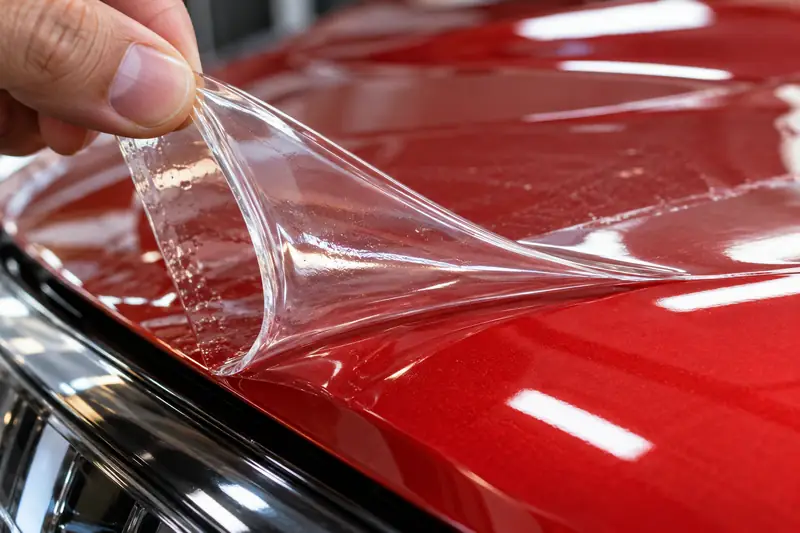
The film is a multi-layer laminate with a hard, scratch-resistant top surface, a tough, flexible core and a clear adhesive. When a small stone hits, the film absorbs and spreads part of the energy instead of letting the stone strike a single point on bare glass. That is often the difference between a harmless mark on the film and a star chip in the windshield.
The top surface also has to survive things paint film never sees: wiper blades dragging across it every rainy day, ice scrapers, and the constant sand-blasting of highway driving. That is why dedicated windshield films use a harder top coat than paint PPF.
Windshield PPF vs paint protection film
It is tempting to use regular clear PPF on glass. In most cases that is a mistake.
| Paint PPF (clear TPU) | Dedicated windshield film | |
|---|---|---|
| Designed for | Painted panels | Glass |
| Optical requirement | Clear enough to show paint color | Distortion-free view for driving |
| Top coat | Soft, self-healing | Harder, wiper-resistant |
| Typical lifespan on glass | Short; wipers scratch it quickly | Longer, though still a wear item |
| Use on windshield | Not recommended | Intended use |
Regular clear TPU paint protection film is excellent on hoods, bumpers and mirrors, and color PPF protects paint while changing the color. On glass, use a film sold specifically for windshields. For a full material explanation, see what is paint protection film.
How much does windshield protection film cost?
Windshield protection film cost depends on the film grade, windshield size and curvature, and the shop's labor rate. Typical ranges, which vary by region:
| Vehicle | Typical installed price (USD) |
|---|---|
| Compact or mid-size car | $250–550 |
| SUV, truck or larger windshield | $350–700 |
| Exotic or sports car, strongly curved glass | $500–900+ |
| Replacement film on a previously protected car | Similar to first install, minus some prep |
Compare that with the cost of a replacement windshield, which can be high on vehicles with cameras, sensors and heads-up displays that need recalibration after replacement. For drivers on gravel roads, desert highways or behind construction trucks, the film often pays for itself after one avoided windshield.
Best windshield protection film: what to look for
The best windshield protection film for a given car meets these points:
- Optical clarity. No haze, waviness or rainbow effect, day or night, including under oncoming headlights.
- Hard, wiper-resistant top coat. Ask how the film holds up under wipers and how long it typically lasts in your climate.
- Clean removal. The film should peel off without leaving adhesive on the glass when it is time to replace it.
- Compatibility with sensors and cameras. Rain sensors, lane cameras and heads-up displays sit behind the windshield; the film must not interfere with them. Ask the supplier and test before offering it on vehicles with driver-assistance systems.
- Clear product data. A reliable supplier provides thickness, clarity and care information for the specific windshield film.
How windshield film is installed
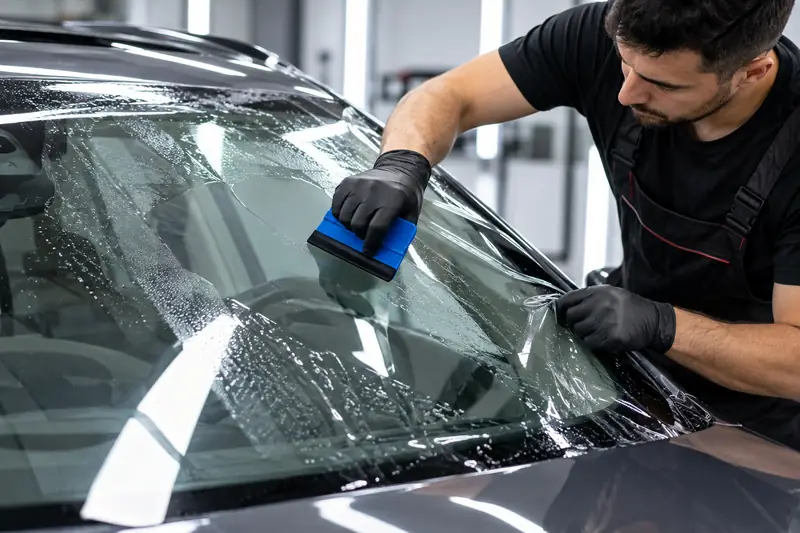
Front windshield protection film is installed on the outside of the glass, wet, in a clean bay. The general sequence:
- Wash the windshield and clay or polish the glass to remove bonded contaminants.
- Remove the wipers if needed, and mask the cowl and trim.
- Lay the film on the glass and heat-shrink it to the windshield's curve, as with tint templating.
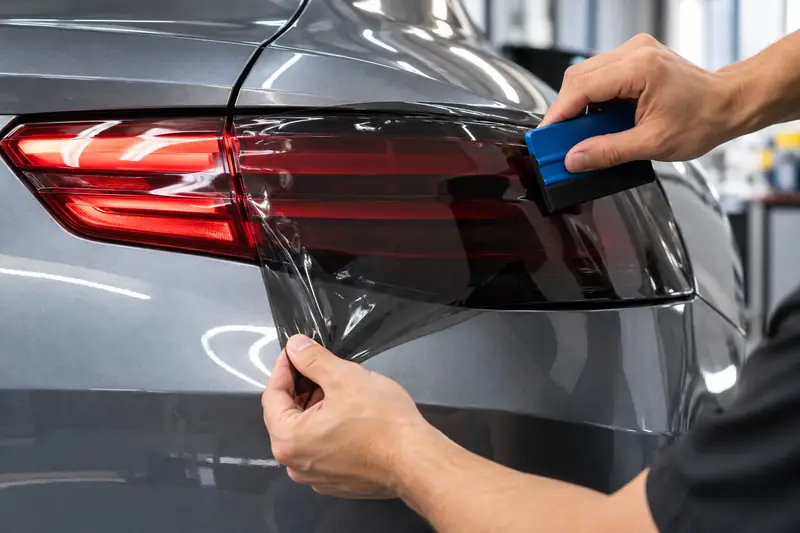
- Spray the glass with slip solution, position the film, and squeegee from the center out.
- Trim the edges a few millimeters inside the glass perimeter so the edges are not exposed to wiper and wash damage.
- Let it cure before washing or using wipers heavily; follow the film maker's guidance.
Experienced tint installers usually adapt to windshield film quickly because the heat-shrinking technique is similar. The general wet-install method for PPF is covered in our paint protection film installation guide.
How long does windshield film last?
Expect windshield film to be a wear item. Depending on the film, how often wipers run, and the roads driven, it typically needs replacement somewhere between one and a few years. Signs it is time: wiper haze that does not clean off, visible impact marks in the driver's line of sight, or lifting edges. Replacing the film is far cheaper than replacing the glass.
Offering windshield protection in your shop
Shops already doing PPF or tint can add windshield film as an upsell with full-front or full-body PPF packages. Mars Decorative Film supplies clear and color PPF on 1.52 × 15 m rolls for paint; for windshield-specific film, contact our sales team to discuss options and samples before building a package.
Frequently asked questions
How much does windshield protection film cost?
Most installs fall roughly between $250 and $900, depending on windshield size, curvature, film grade and region. Exotic cars with strongly curved glass sit at the top of that range.
How much is windshield protection film compared with a new windshield?
Film is usually a fraction of the cost of a replacement windshield, especially on vehicles with cameras and sensors that need recalibration after glass replacement. It is a common choice for drivers who chip windshields often.
Is there a windshield protector that stops rock chips?
Yes. Exterior windshield protection film absorbs small stone impacts and greatly reduces chips and pitting. It cannot stop every break; a large rock or heavy impact can still damage the glass.
Can I put regular PPF on my windshield?
It is not recommended. Paint PPF has a soft, self-healing top coat that wipers scratch quickly, and it is not made to the optical standard needed for driving. Use a film designed for glass.
Does windshield protection film affect visibility?
A quality windshield film should be optically clear with no distortion. Poor films can show haze or glare at night, which is why clarity is the first thing to check when choosing a product.
Is windshield protection film legal?
Clear exterior windshield films are widely used, but rules on any film on a windshield vary by country and state. Check local regulations before installing, especially on the area swept by the wipers.
Is a windshield protection coating the same as film?
No. A coating is a thin hydrophobic layer that improves water beading and rain visibility. It adds no meaningful impact protection, while film adds a physical layer between the stone and the glass.