Business · 7 min read
How to choose vinyl suppliers for bulk car wrap rolls wholesale
How to choose vinyl suppliers for wholesale car wrap rolls: roll sizes, samples, MOQs, quality checks, lead times and a checklist for distributors and shops.
Short answer: Good vinyl suppliers for bulk car wrap rolls offer consistent batches, clear data sheets, free samples, low minimum orders and predictable lead times. Compare them on film type, roll size, adhesive, batch tracking and landed cost per roll, not unit price alone, and test samples on real panels before placing a stock order.
Choosing vinyl suppliers is one of the biggest decisions a wrap shop or distributor makes. Film is the largest material cost on most jobs, and a bad batch shows up as callbacks, not as a line on an invoice. This guide is for wrap shops buying in volume, distributors building a range, and importers comparing factories. It explains how wholesale vinyl is sold, what to ask a supplier, how to evaluate samples and what drives the landed cost of a car wrap roll.
Key takeaways
- Standard car wrap rolls are 1.52 m (5 ft) wide. PVC and PET-liner vinyl usually come 17–18 m long, and PPF usually 15 m long.
- Buying from a manufacturer, a national distributor or a local reseller trades off price, stock depth and speed.
- Always test vinyl wrap samples on real panels: stretch, adhesive tack, air release, post-heat memory and removal.
- Ask every supplier about batch numbering and quality control. Color consistency between rolls matters more than one good sample.
- Compare landed cost per usable meter, including freight, duties and waste, not just the ex-works price per roll.
Types of vinyl suppliers
Bulk vinyl reaches shops through three main routes.
| Supplier type | Typical minimum | Price per roll | Lead time | Best for |
|---|---|---|---|---|
| Local reseller | Single rolls or by the meter | Highest | Same day to a few days | Urgent jobs, small shops, trying new colors |
| Regional or national vinyl wrap distributor | One roll up, often with volume pricing | Middle | A few days | Shops that want stock depth without importing |
| Manufacturer / factory direct | Often one roll to a pallet, depending on the factory | Lowest | Production plus international freight | Distributors, importers, high-volume shops, private label |
Many established shops use more than one route. They buy their core colors in bulk direct from a factory, and fill gaps from a local distributor. If you plan to import, our guide to importing car wrap film from China covers shipping terms, documents and timing.
What wholesale vinyl suppliers sell
A full wrap range usually covers four material families:
- PVC vinyl wrap in gloss, satin, matte and metallic. This is the volume line with the widest color range. See our PVC vinyl wrap line.
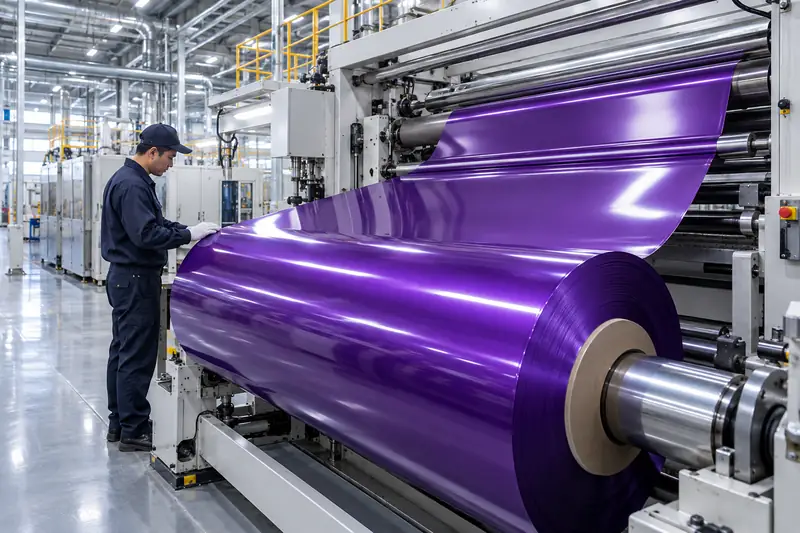
- PET-liner vinyl for gloss color changes with a paint-like, low-orange-peel finish.
- Color PPF for color change plus stone-chip protection on self-healing TPU. See color PPF.
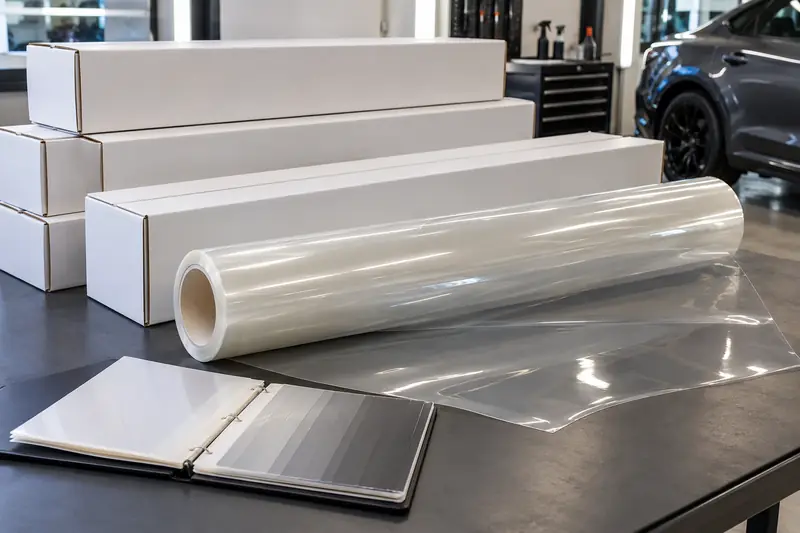
- Clear PPF for invisible protection packages.
Many suppliers also offer printed and effect films, tint and tools. The TPU vs PET vs PVC comparison explains how distributors usually split stock between these families.
Roll sizes and big rolls of vinyl
Most wholesale car wrap rolls share the same format:
| Product | Typical roll size | Approximate area |
|---|---|---|
| PVC color-change vinyl | 1.52 × 17–18 m | About 26–27 m² |
| PET-liner vinyl | 1.52 × 17–18 m | About 26–27 m² |
| Color PPF / clear PPF | 1.52 × 15 m | About 23 m² |
| Sign and cutting vinyl | Various widths, often narrower | Varies |
A full-size roll typically wraps one average car, with some left over, though larger vehicles and complex bodywork can use more. The wrap length calculator helps estimate film per vehicle. Some factories also produce larger "jumbo" rolls for converters who slit and rewind their own; ask if you need them.
How to evaluate vinyl wrap samples
Free car wrap samples are the cheapest insurance in this business. A small swatch shows color, but A4 sheets or larger let installers actually test the film. Here is a practical test routine.
- Check the color in daylight and under shop lights, against your current film and against the supplier's swatch book.
- Feel the liner and face film. Note thickness, how flat the liner lies, and whether the film curls.
- Test air release. Lay a piece on a flat panel without squeegeeing fully, then press out the air channels. Bubbles should push out easily.
- Test stretch and memory. Heat and stretch film into a recess or over a mirror cap. Post-heat it as the data sheet says, then check the next day for lifting.
- Check adhesive tack. Initial tack should allow repositioning. Final bond should hold edges.
- Test removal. After a few days, warm the film and peel it to check for adhesive residue and clean release.
- Leave a piece outside, if time allows, to see how the surface holds up compared with your current film.
For PPF samples, also check clarity, orange peel, self-healing with heat, and how the edges behave after wet installation.
Questions to ask any vinyl supplier
Use this list when comparing a new supplier with your current one:
- Film construction: Is the PVC cast or calendered? What thickness? Which adhesive and liner?
- Data sheets: Are technical data sheets available with application temperatures, post-heat guidance and storage conditions?
- Batch numbering: Is every roll batch-numbered, and can reorders be matched to an earlier batch?
- Quality control: How are rolls inspected before release?
- Minimum order: Can you mix colors to reach the minimum?
- Lead times: How long do in-stock and custom orders take to ship?
- Samples and swatch books: Are they free for trade buyers?
- Documents: Can the supplier provide RoHS or other compliance documents your market needs?
- Packaging: How are rolls protected for shipping? Are the boxes rigid, the cores capped and the rolls suspended?
- Private label: Can rolls ship in neutral packing or under your own brand?
As an example of what to expect from a factory: Mars Decorative Film batch-numbers every roll, inspects incoming material, checks film on the line, and releases rolls one by one. The minimum order is one roll, with mixed colors welcome. In-stock films ship in about 3 business days, and custom orders take roughly 7 business days.
What drives the cost of bulk vinyl wrap
Wholesale prices vary widely by film type, finish, market and volume, so comparing two quotes means comparing the same thing. The main cost drivers are:
- Material family. Calendered PVC is typically the lowest cost per roll, PET-liner and cast films sit in the middle, and TPU PPF is the highest.
- Finish and effects. Chrome, color shift and special effect films usually cost more than solid colors.
- Roll length. A cheaper roll that is shorter may cost more per meter.
- Freight and duties. Rolls are bulky. Sea freight lowers cost per roll for larger orders, while air or express shipping costs more but arrives faster. Duties depend on your country.
- Waste and callbacks. Film that is harder to install, or that lifts, costs labor. That often outweighs a small difference in price per roll.
The useful number is landed cost per usable meter: price, plus freight, duties and handling, divided by the film you actually get onto cars.
Becoming a vinyl wrap distributor
Distributors need more than good prices. They need a range their customers can rely on. Practical steps:
- Start narrow. Pick a core set of best-selling colors in PVC, a smaller gloss PET-liner range and a few color PPF shades. Add colors as demand shows.
- Keep swatch books on hand so customers can choose from a physical sample, not a screen.
- Track batches in your stock system so you can match reorders for repairs.
- Store rolls correctly. Keep them in their boxes, suspended or horizontal, out of heat and humidity, and rotate stock first in, first out.
- Consider your own brand. Private-label rolls, printed liners and branded boxes help you build loyalty. See our private label car wrap brand guide and the OEM service page.
Buying bulk rolls from Mars Decorative Film
Trade buyers can order from one roll across our PVC, PET-liner, color PPF and clear PPF lines, with mixed colors. Request free samples or a swatch book to run the tests above, or browse the full product catalog.
Frequently asked questions
How do I choose a vinyl supplier for car wraps?
Compare suppliers on film construction, data sheets, batch consistency, minimum order, lead times and landed cost. Then test samples on real panels for stretch, air release and removal. A supplier whose batches match roll after roll is worth more than the lowest price per roll.
How big is a roll of car wrap vinyl?
Most car wrap vinyl rolls are 1.52 m (5 ft) wide and about 17–18 m long. Paint protection film rolls are usually 1.52 m wide and 15 m long. One full roll typically wraps an average car, though large or complex vehicles can need more.
Can I get free vinyl wrap samples?
Many manufacturers and distributors offer free samples or swatch books to trade buyers such as wrap shops and distributors. A4-sized samples are more useful than small swatches, because installers can test stretch and adhesive, not just color.
Is it cheaper to buy wholesale vinyl direct from a factory?
Usually the price per roll is lower direct from a manufacturer. You then add international freight, duties and longer lead times. For shops using many rolls a month, buying direct often lowers landed cost; small shops may be better served by a local distributor.
What is the minimum order for bulk vinyl wrap?
It depends on the supplier. Some factories require a pallet or a set number of rolls per color. Others, including Mars Decorative Film, accept orders from one roll with mixed colors.
How should bulk vinyl rolls be stored?
Keep rolls in their original boxes, either suspended on their end caps or lying horizontally, never standing on end. Store them in a cool, dry place away from direct sun. Rotate stock so older batches are used first.