Business · 6 min read
Best car wrap brands: how to judge a vinyl wrap manufacturer
What makes the best car wrap brand or manufacturer: film types, quality checks, reviews, samples and supply terms, explained for shops and distributors.
Short answer: The best car wrap is the film that installs predictably, matches its sample, holds color for its rated life and removes cleanly. Judge a brand or manufacturer by its film construction, batch consistency, technical data, sample program, stock availability and support, not by name or marketing alone. Test samples on your own panels before buying volume.
Ask ten installers to name the best car wrap and you will get several different answers, because each shop values different things: one wants the easiest film for new staff, another the deepest gloss, another the lowest cost per car. This guide is for wrap shops, distributors and importers comparing car wrap brands and vehicle wrap manufacturers. It explains what actually separates high quality vinyl wrap from cheap film, how to read reviews, and how to test a new supplier before committing.
Key takeaways
- There is no single best vinyl wrap brand; the right film depends on the job, the installer's skill and the customer's budget.
- Film construction matters most: cast or premium calendered face film, air-release adhesive, and a suitable liner (paper or PET).
- Batch-to-batch color consistency and clear batch numbering are what keep reorders and panel repairs matching.
- Reviews are useful for install feel and support, but a sample tested on your own panels tells you more.
- Many shops and distributors use more than one brand: a premium line for showcase cars and a value line for price-driven jobs.
What makes the best vinyl wrap for cars?
The best car wrap material combines four things: it is easy to install, it looks right, it lasts, and it comes off cleanly. In practice that breaks down into specific features.
| Feature | What to look for | Why it matters |
|---|---|---|
| Face film | Cast or high-grade calendered PVC; PET liner for paint-like gloss | Conformability over curves, less shrink-back |
| Adhesive | Air-release channels, repositionable at first touch | Faster, bubble-free install |
| Liner | Stable paper or PET liner, clean release | Smooth surface, easier handling |
| Finish quality | Low orange peel on gloss, even satin and matte | Closer to paint appearance |
| Color consistency | Batch numbers, tight tolerance between rolls | Reorders and repairs match |
| Durability | Rated outdoor life on the data sheet | Avoids fading and hard removal |
| Removability | Clean removal within rated life | Protects customer paint |
For a material-level comparison, see our guide to TPU vs PET vs PVC car wrap film.
Best car wrap material by job type
Different jobs call for different films. A good supplier covers several of these:
- Full color change on a daily driver: conformable PVC vinyl wrap in gloss, satin or matte.
- Premium gloss that looks like paint: PET liner vinyl, which typically shows less orange peel.
- Color change plus stone-chip protection: color PPF made from self-healing TPU.
- Invisible paint protection: clear TPU PPF.
- Fleet and short-term graphics: printable vinyl with laminate, or economy films for flat panels.
Our article on the best vinyl wrap for cars goes deeper on choosing film by vehicle and budget.
Best vinyl wrap for beginners
New installers benefit most from films that forgive mistakes. Look for:
- Air-release adhesive so trapped air can be pushed out.
- Low initial tack so the film can be lifted and repositioned.
- Moderate thickness, not so thin that it tears or so thick that it fights recesses.
- Satin or matte finishes for practice; gloss shows every squeegee mark.
Start with flat or gently curved panels like a roof or hood, then move to bumpers and mirrors. A beginner-friendly film still needs proper surface prep and post-heating; follow the film's data sheet.
How to read car wrap reviews
Vinyl wrap reviews, vehicle wrap reviews and online forum threads can help, but read them carefully.
- Separate film from installer. Lifting edges, bubbles and failed corners are often installation or prep problems, not film defects.
- Check the date. Brands change formulas and color ranges; a review from years ago may not reflect current stock.
- Look for patterns. One bad roll is a data point; repeated reports of color mismatch, adhesive failure or poor support are a warning.
- Ask what climate. A film that lasts well in a cool, cloudy region may age faster under strong sun.
- Value install feel and support comments; these are hard to judge from a data sheet.
The most reliable "review" is your own: install a sample panel, leave it outdoors, and remove it after a few months.
Car wrap brands vs direct manufacturers
Shops buy film through three main routes:
| Route | Pros | Cons |
|---|---|---|
| Large international wrap brands | Wide recognition, established warranties, broad training | Highest price, limited margin for distributors |
| Regional distributors | Local stock, fast delivery, local support | Middle price, range limited to what they carry |
| Direct from vehicle wrap manufacturers | Lower cost per roll, OEM and private label options, direct technical contact | Lead times for shipping, need to qualify the factory |
Many distributors combine routes: a recognized premium line for customers who ask by name, plus a factory-direct or private-label line for value and margin. Our private label guide explains how to build your own brand.
How to evaluate a car wrap manufacturer
When comparing car wrap manufacturers, ask concrete questions and get the answers in writing:
- Range: Which film types and finishes do you make? How often do you add colors?
- Construction: Is the face film cast or calendered? What adhesive and liner are used?
- Quality control: What do you check on incoming materials, in-line and before release? Are rolls batch-numbered?
- Documentation: Can you provide data sheets and compliance documents such as RoHS on request?
- Samples: Will you send samples or swatch books so we can test install and color?
- Terms: What is the MOQ, and can colors be mixed? What are lead times for stock and custom orders?
- Packaging and OEM: Can you supply neutral packing, printed liners or branded boxes?
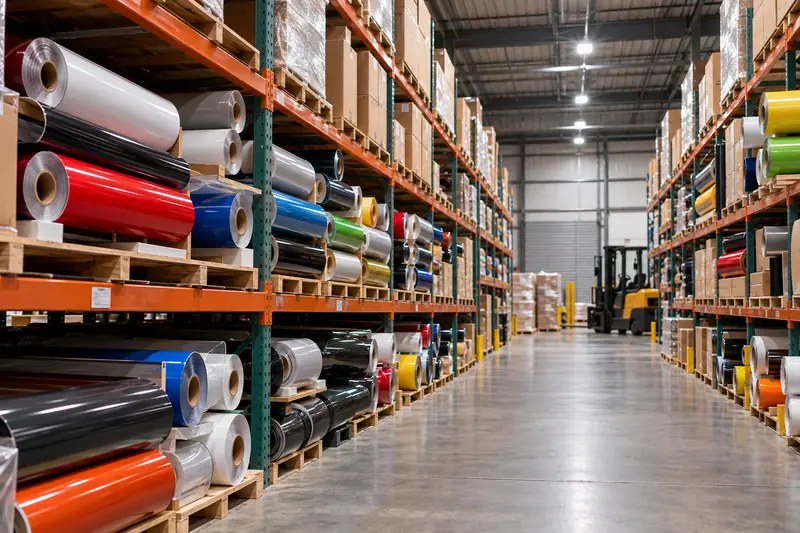
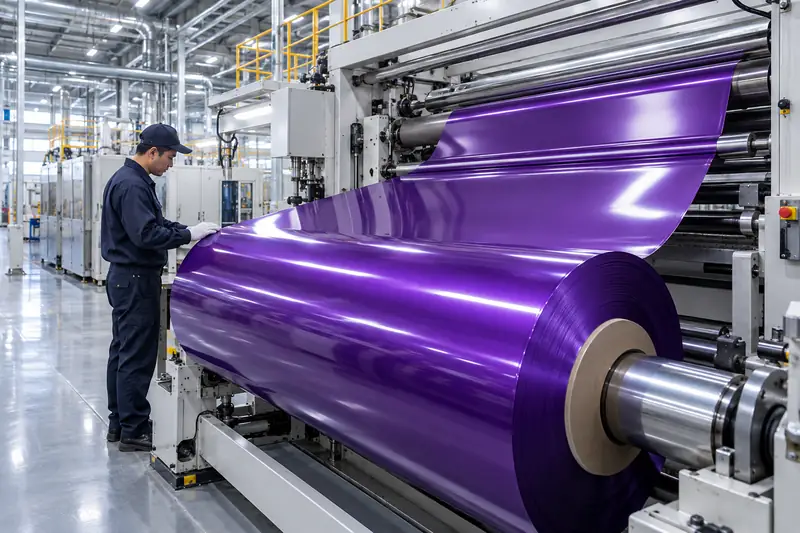
As one example of what to expect from a factory, Mars Decorative Film runs six coating and slitting lines in Shanghai, makes more than 400 film types across eight product lines, batch-numbers every roll and ships in-stock films in about three business days with an MOQ of one roll.
Top car wraps by finish: what shops stock
Rather than ranking brands, most experienced shops rank films by finish and job. A typical stock plan:
- Core gloss, satin and matte colors in a reliable PVC line.
- Premium gloss colors on PET liner for showcase cars.
- Effect films such as chrome, carbon and color shift for accent work.
- Color PPF and clear PPF for protection packages.
Revisit the mix every season based on what sells, and test new colors from samples first.
Buying film for your shop
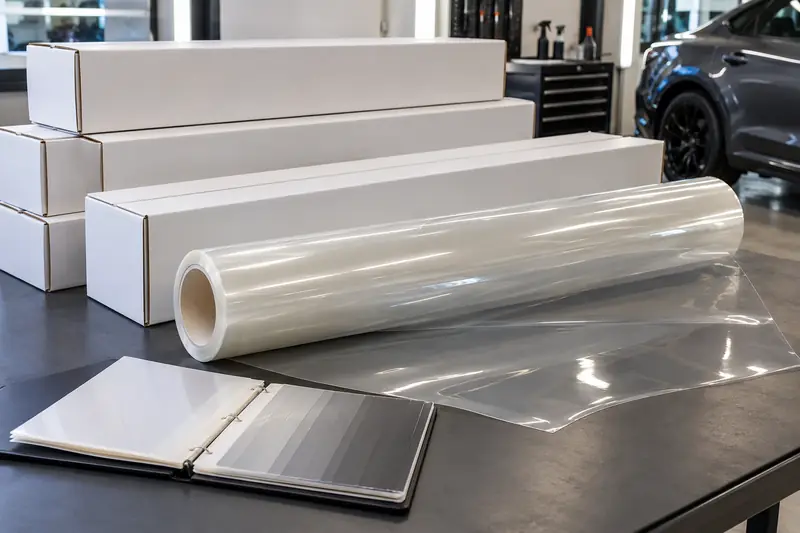
If you are comparing suppliers, start by testing. Trade buyers can request free A4 samples or swatch books and compare them side by side with their current film.
Frequently asked questions
What is the best car wrap brand?
There is no single best car wrap brand for every shop. The best choice is a film that installs predictably for your team, matches its samples, holds color for its rated life and is supplied consistently. Test samples from several brands on your own panels.
What is the best vinyl wrap material?
For most color changes, a conformable cast or high-grade calendered PVC film with air-release adhesive is the standard. PET liner vinyl gives a smoother, paint-like gloss, and TPU color PPF adds stone-chip protection at a higher price.
What is the best vinyl wrap for beginners?
Choose a film with air-release adhesive and low initial tack so it can be repositioned, and practice with satin or matte finishes on flat panels first. Gloss films show squeegee marks more easily.
Are cheaper car wrap brands worth it?
Some are, for short-term or flat-panel jobs, but very cheap films can shrink, fade or leave residue on removal. Ask for data sheets and test a sample outdoors before using any new film on customer cars.
How do I know if a wrap manufacturer is reliable?
Ask about film construction, quality checks, batch numbering, documentation, samples, MOQ and lead times. A reliable manufacturer answers clearly, sends samples and can trace each roll by batch.
Can I sell wrap film under my own brand?
Yes. Many manufacturers offer OEM or private label options such as printed liners, branded boxes and swatch books. See our private label guide for how the process typically works.