Vinyl wraps · 7 min read
Best vinyl wrap and window film for cars: how to choose the right film
How to choose the best vinyl wrap and window film for cars: cast vs calendered, PET liner, finishes, topo wraps, tint types and what good film looks like.
Short answer: The best vinyl wrap for cars is usually a cast or PET-liner film with air-release adhesive, clean removability and consistent color between batches. The best window film for cars is typically a ceramic tint that rejects heat without signal interference, at a darkness legal where you drive. Always match film grade to the job and budget.
Choosing the best vinyl wrap or the best window film for cars is less about one "winning" product and more about matching film construction to the vehicle, the finish and the customer's budget. This guide explains what separates good car vinyl wrap from bad, how to judge film quality yourself, which trends such as topographic wraps are worth stocking, and how to pick window tint. It is for wrap shops and distributors building a range, and for owners comparing quotes.
Key takeaways
- Cast PVC and PET liner vinyl are generally the best automotive vinyl wrap materials for full color changes; calendered film suits flat panels and short-term jobs.
- Air-release adhesive, repositionability and clean removal matter more to installers than brand name.
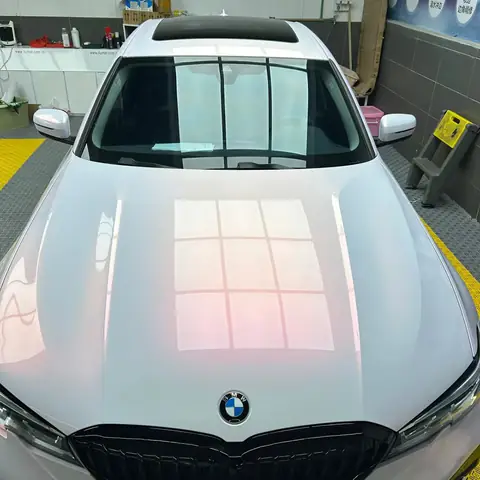
- Gloss colors look most paint-like on PET liner film, which has very low orange peel.
- Printed effect films such as topographic, camo and carbon fiber are great for accents but often stretch less than solid colors.
- For window film, ceramic tint usually offers the best heat rejection without signal interference; legal darkness varies by country and state.
What makes a good car vinyl wrap?
A good vinyl wrap is easy to install, looks right when finished, stays put for its rated life and comes off cleanly. Each of those depends on specific film properties.
| Property | What good looks like | Why it matters |
|---|---|---|
| Film construction | Cast or PET liner for full wraps | Conforms to curves with low shrinkage |
| Adhesive | Air-release channels, low initial tack | Bubble-free installs, repositioning |
| Conformability | Stretches into recesses with heat without whitening | Fewer seams and inlays |
| Memory | Low; film stays where you post-heat it | Fewer lifting edges in recesses |
| Surface | Smooth, low orange peel, even sheen | Paint-like finish |
| Color consistency | Same color across batches | Repairs match the original |
| Removability | Clean removal with heat within rated life | Protects the customer's paint |
| Liner | Flat, easy release, often with a grid | Faster cutting and handling |
Cast vs calendered: the biggest quality decision
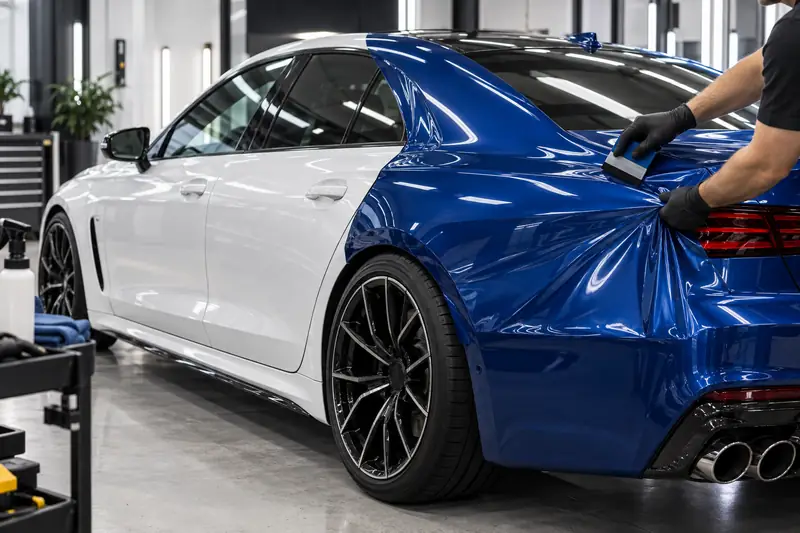
Cast vinyl is made by pouring liquid PVC onto a carrier and curing it, so the film has very little stress built in. It is thin, conforms well, and shrinks very little. Calendered vinyl is rolled into sheets, which leaves stress in the film; it tends to want to shrink back and is better on flat or gently curved panels. For a full color change, the best vehicle wrap material is normally cast or PET liner film. For roof panels, stripes, chrome delete on flat trim or budget jobs, quality calendered film can be fine.
PET liner vinyl for paint-like gloss
PET liner vinyl uses a rigid polyester liner that keeps the color film exceptionally flat, which cuts down orange peel. It is a strong choice when customers want a gloss color that reads like fresh paint. See our PET liner vinyl explainer or compare all three families in TPU vs PET vs PVC car wrap film.
Color PPF as a premium alternative
If the customer wants protection as well as color, color PPF made from TPU offers stone-chip resistance and self-healing, at a higher price than vinyl. It is often the best auto wrap choice for new, high-value cars that see highway miles.
How to judge film quality before you buy
You do not need a lab to check wrap film. Most shops run a simple test before adopting a new product:
- Order samples or a short roll. Test on a scrap bumper or test panel, not a customer car.
- Check slide and tack. Lay the film down lightly; it should reposition easily before you squeegee.
- Stretch into a recess. Heat and stretch into a deep curve. Watch for whitening, thinning color or distortion in effect films.
- Post-heat and wait. Leave the panel for several days and check whether the film pulls back from recesses.
- Inspect the surface. Look at a gloss panel under strong light for texture and pinholes.
- Remove it. Warm and peel after a week or two. Note adhesive residue and how easily it comes off.
- Compare two rolls. If possible, test two rolls from different batches side by side for color match.
At Mars Decorative Film, every roll is batch-numbered and released roll by roll after inspection, which makes it easier to reorder a matching batch for repairs.
Best car vinyl finishes and trends
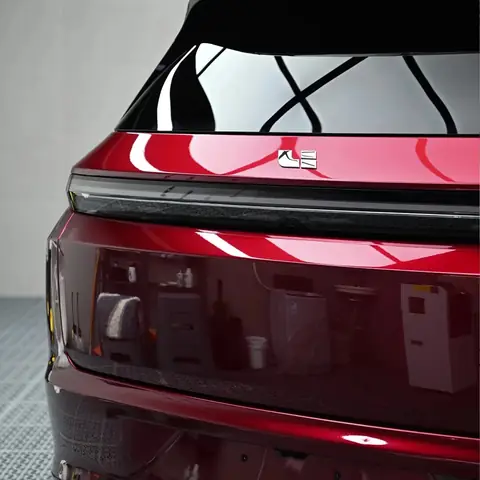
- Gloss solid colors. The most paint-like option; best on PET liner film.
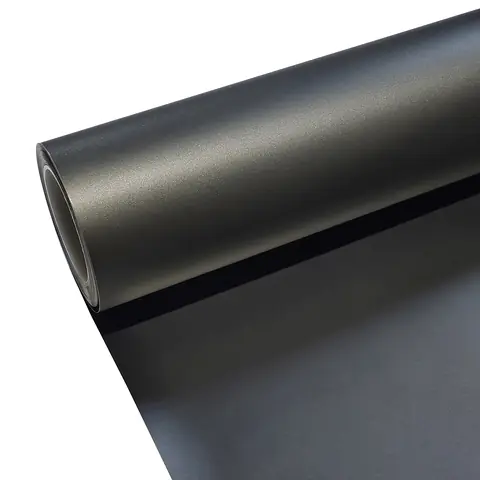
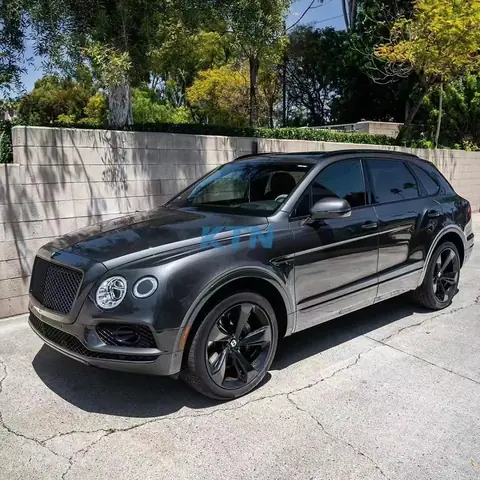
- Satin and matte. Hide minor waviness and look modern. See our guide to satin, matte and gloss black wraps.
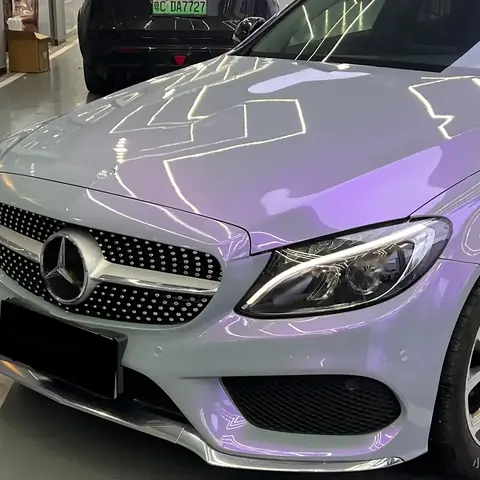
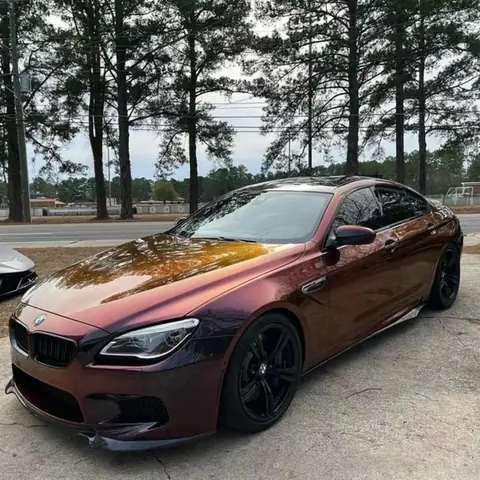
- Metallic and color shift. Add depth and movement; color shift films change hue with viewing angle.
- Chrome. High impact but harder to install; check local rules on reflective finishes before a full chrome car.
- Printed effects. Carbon fiber, camo, wood grain and brushed metal are popular for roofs, mirrors and interiors.
Topographic vinyl wrap
A topographic vinyl wrap, often called a topo wrap, uses a contour-line pattern like a map. It has become a popular accent for hoods, roofs, side stripes, motorcycle tanks and off-road builds, as well as full wraps on trucks. Topographic car wrap designs are typically printed on printable vinyl and laminated, or supplied as pre-printed pattern film. Points to watch:
- Line patterns distort visibly when overstretched, so plan panel layouts and avoid deep recesses in one piece.
- Align the pattern across panel gaps for a clean look.
- Choose a laminate finish that suits the design: matte laminates make topo lines look more graphic, gloss makes colors pop.
Using a car wrap visualizer
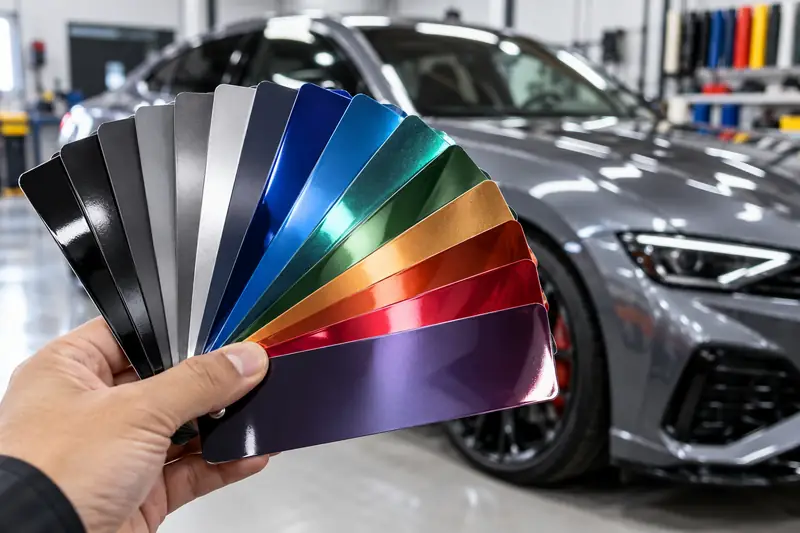
Many shops use a free car wrap visualizer or 3D configurator to show customers how a color will look on their car model. They are useful for narrowing choices, but screens rarely show true sheen and color. Always confirm with a physical sample held against the car in daylight.
Best window film for cars: which sun film?
Window film, also called sun film or tint, is a separate product from wrap vinyl. It is designed to be optically clear and to reduce heat, glare and UV. The main types:
| Tint type | Heat rejection | Signal interference | Relative cost |
|---|---|---|---|
| Dyed film | Lower | None | Lowest, most affordable window film |
| Carbon film | Medium | None | Middle |
| Ceramic film | High | None | Higher |
| Metalized film | Medium to high | Can affect phone and GPS signals | Middle |
For most drivers, a ceramic tint is the best window film for cars when heat rejection matters, and carbon film is a solid mid-priced option. Dyed film is the affordable choice for privacy and glare. Darkness is measured as visible light transmission (VLT), and legal limits vary by country and state, so check local rules before installing. Our window tint VLT guide explains how VLT works.
Stocking the right range
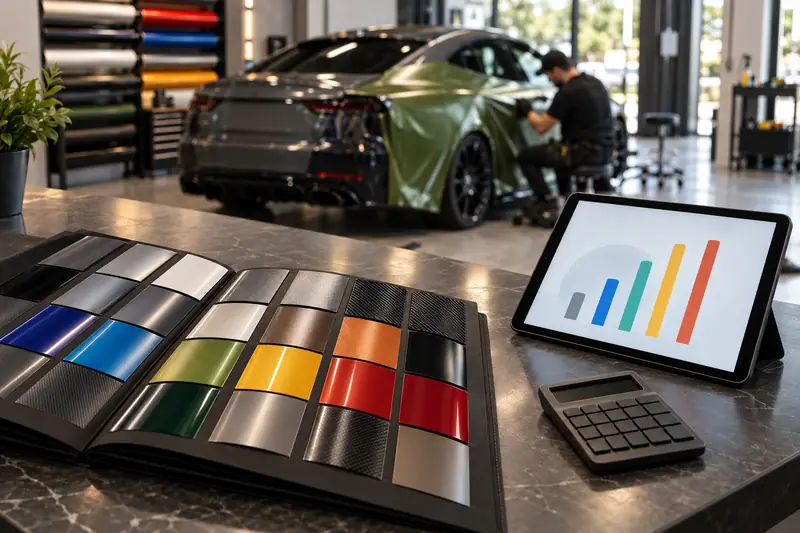
A shop or distributor typically starts with a core range of gloss, satin and matte solids in PVC, a selection of PET liner gloss colors, and a few effect films for accents. Browse our PVC vinyl wrap range and printed and effect vinyl, and request free A4 samples to run your own install tests.
Frequently asked questions
What is the best vinyl wrap for cars?
There is no single best film for every job. For full color changes, cast or PET liner vinyl with air-release adhesive and clean removability is the usual choice. For flat panels and short-term jobs, quality calendered film can be a cost-effective option.
Which sun film is best for a car?
Ceramic window film is generally the best choice for heat rejection without affecting phone or GPS signals. Carbon film is a good mid-priced alternative, and dyed film is the most affordable option for privacy. Choose a darkness that is legal in your area.
Is cast vinyl better than calendered vinyl?
For curves and full wraps, yes. Cast vinyl conforms better and shrinks less, so it is less likely to lift from recesses. Calendered vinyl is cheaper and works well on flat or gently curved surfaces.
What is a topo wrap?
A topo wrap uses a topographic contour-line pattern, like the lines on a hiking map. It is printed on wrap vinyl and is popular as an accent on hoods, roofs and off-road vehicles. Plan the layout carefully, since line patterns show distortion when overstretched.
How can I tell if vinyl wrap is good quality?
Test a sample on a panel: check how easily it repositions, how it stretches into a recess with heat, whether it pulls back after post-heating, and how cleanly it removes. Also compare colors between two rolls to check batch consistency.
What is the best wrap color for a BMW or other sports car?
Popular choices include satin and gloss greys, gloss black, deep metallics and color shift films, which suit sharp body lines. Satin finishes are especially popular on sports cars because they show creases without heavy reflections. Test samples against the car in daylight before choosing.