Vinyl wraps · 3 min read
TPU vs PET vs PVC car wrap film: which material should you stock?
How TPU paint protection film, PET liner vinyl and PVC wrap differ in thickness, protection, finish, installation and cost — and which one fits your shop or distribution business.
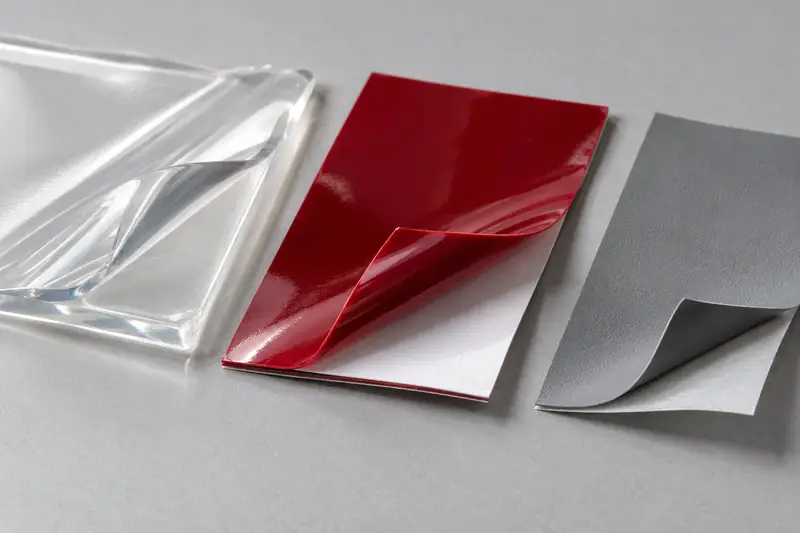
Short answer: Choose TPU when the customer wants protection (stone chips, self-healing scratches) as well as color; choose PET liner vinyl when the priority is a paint-like, low-orange-peel color change; choose PVC vinyl when you need the widest color range and the lowest cost per car.
Three material families cover almost every film sold to wrap shops today. They overlap on color, but they solve different problems, and mixing them up is the most common reason a customer is unhappy with a finished car.
The three materials at a glance
| TPU (PPF / color PPF) | PET liner vinyl | PVC vinyl | |
|---|---|---|---|
| Typical face thickness | 6.5–10 mil (about 165–250 µm) | Similar to PVC face film; the PET is the liner | About 3–6 mil (75–150 µm) |
| Main job | Protection, with or without color | Color change with a paint-like surface | Color change, widest range |
| Self-healing | Yes, with heat | Some premium lines | No |
| Stone-chip resistance | High | Low to medium | Low |
| Orange peel | Low | Very low | Varies by grade |
| Relative cost | Highest | Middle | Lowest |
| Typical roll | 1.52 × 15 m | 1.52 × 17–18 m | 1.52 × 17–18 m |
TPU: protection first
Thermoplastic polyurethane is the material behind paint protection film. It is thick, elastic and tough, with a clear coat that "self-heals" light scratches when warmed. Clear TPU protects factory paint invisibly; color PPF adds pigment so the same film changes the color as well.
Choose TPU when:
- The customer drives on gravel or highways and worries about stone chips.
- They want the look of a new color but also want resale protection for the original paint.
- You sell premium packages where installation time is priced in.
Trade-offs: TPU costs more per meter and is installed wet, so it takes longer than a dry vinyl install.
PET liner vinyl: the smoothest color change
"PET" refers to the liner, not the film you see. Instead of a paper backing, the color film is cast and stored on a rigid polyester liner. Because the liner stays perfectly flat, the face film comes out with very little texture — the orange-peel effect that can make vinyl look like vinyl.
Choose PET liner vinyl when:
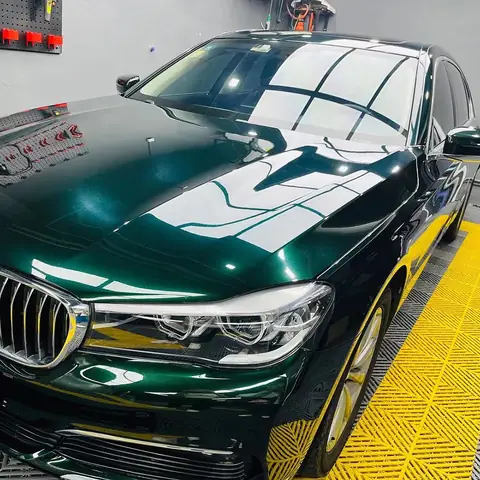
- Gloss, liquid-metal or crystal finishes need to look as close to paint as possible.
- You want a vinyl-priced job with a premium appearance.
The face film is still a conformable PVC with air-release adhesive, so your installers keep their usual technique.
PVC vinyl: range and value
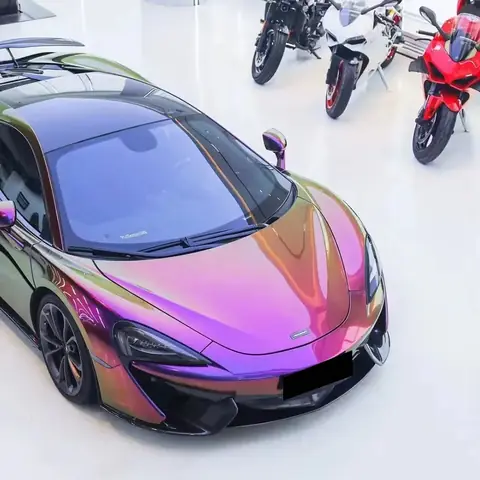
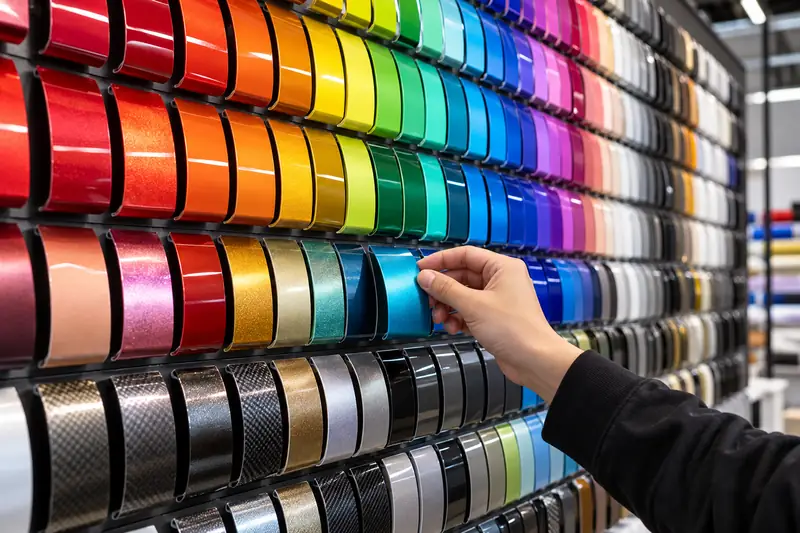
Calendered and cast PVC films are the workhorse of the wrap industry. They come in the widest range of colors and effects — satin, matte, chrome, carbon, color shift — and are the lowest cost per car.
Choose PVC when:
- Your customers want unusual colors and effects.
- The job is a lease return, fleet or short-term color change.
- You need a broad stock range without tying up too much cash.
How distributors usually split their range
A practical starting mix is a deep PVC color range for volume, a curated set of PET liner gloss colors for premium color changes, and a handful of best-selling color PPF shades plus clear PPF for protection packages. Order free samples of each family so your installers can compare feel and finish side by side.
Frequently asked questions
Is PET film the same as PPF?
No. PET liner vinyl is a color-change vinyl on a polyester backing; PPF is a thick TPU protection film. Only TPU offers meaningful stone-chip protection.
Can I put clear PPF over vinyl wrap?
It is possible but rarely worth it: you pay for two films and two installs. Color PPF gives color and protection in one layer.
Which film lasts longest outdoors?
Durability depends on grade and climate. TPU protection films and premium vinyls are typically rated longer than economy PVC; check the rated durability on each film's data sheet.