Tools & installation · 6 min read
How to wrap a car: DIY steps, training and wrap installation rates
Vehicle wrap installation rates, step-by-step car wrap installation, DIY tips, chrome bumper wrapping, fleet installs and how to find vinyl wrap training.
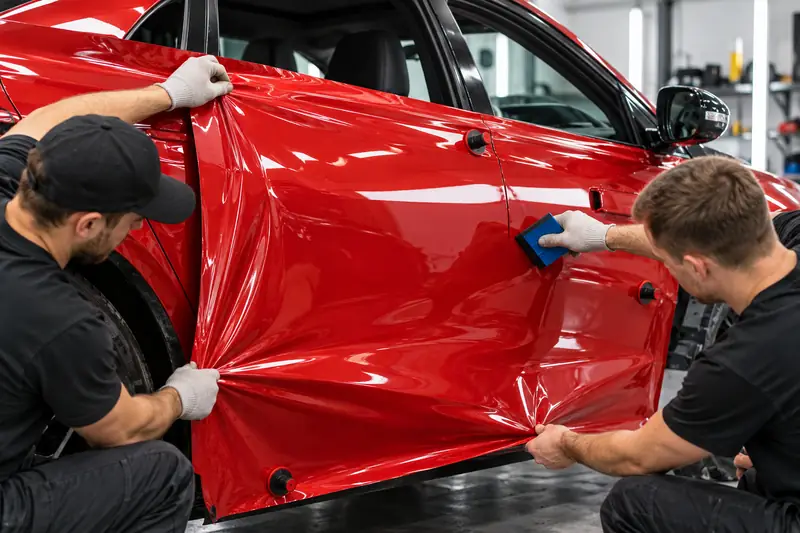
Short answer: Vehicle wrap installation rates in the US typically range from about $1,500 to $4,000 in labor for a full car color change, often quoted per vehicle or roughly $5 to $15 per square foot for commercial graphics. A full wrap takes a skilled installer about 2 to 5 days; DIY is possible with practice, patience and the right tools.
Vehicle wrap installation rates, DIY feasibility and training are three sides of the same question: how much skill does it take to wrap a car well? This guide walks through how professional shops price installation, the step-by-step car wrap installation process, what DIY wrappers should expect, and how installers build skills through vinyl wrap training. It is aimed at new installers, shop owners setting rates, and car owners deciding whether to wrap a car themselves.
Key takeaways
- Labor for a full car color change typically runs about $1,500–$4,000 in the US, before film cost; rates vary by region and shop.
- Commercial graphics are often priced per square foot, commonly around $5–$15 for installation alone.
- A full wrap takes a professional roughly 2–5 working days including prep, disassembly and post-heating.
- DIY car wraps are possible, but first-timers usually need extra film and should start with small panels.
- Post-heating every stretched area, edge and recess is the step that most often separates lasting wraps from failures.
- Chrome bumpers can be wrapped after thorough cleaning and scuffing, but adhesion is harder than on painted surfaces.
Vehicle wrap installation rates
Shops price installation in a few common ways:
| Pricing method | Typical range (USD, varies by region) | Used for |
|---|---|---|
| Per vehicle (color change labor) | About $1,500–$4,000 for a sedan | Full color changes |
| Per square foot (install only) | Roughly $5–$15 per sq ft | Printed commercial and fleet graphics |
| Per hour | Often $60–$150 per hour | Repairs, partial jobs, complex add-ons |
| Per panel | From about $100–$400 per panel | Hoods, roofs, mirrors, bumpers |
Rates rise for complex vehicles, door jambs, full disassembly and specialty films such as chrome. Fleet wrap installation is often quoted per square foot or per vehicle with a volume discount for identical vans or trucks. For full retail prices including film, see our guide to car wrap cost.
What sets an installer's rate
- Experience and portfolio: proven installers with fewer redos can charge more.
- Warranty: a written workmanship warranty adds cost but also value.
- Shop overhead: a clean, heated, well-lit bay is not cheap to run.
- Film type: effect and chrome films take longer and waste more.
Can you wrap a car yourself?
Yes, you can wrap a car yourself, and many enthusiasts do. Be realistic, though:
- A first full DIY car wrap often takes several weekends.
- You will likely waste film learning; budget extra length.
- Complex bumpers and mirrors are the hardest parts — many DIYers leave them to a pro.
- Mistakes on edges and seams show up as lifting within weeks.
A good DIY wrap path is to start with a roof, hood or interior trim, then move to doors and fenders, and only then attempt bumpers.
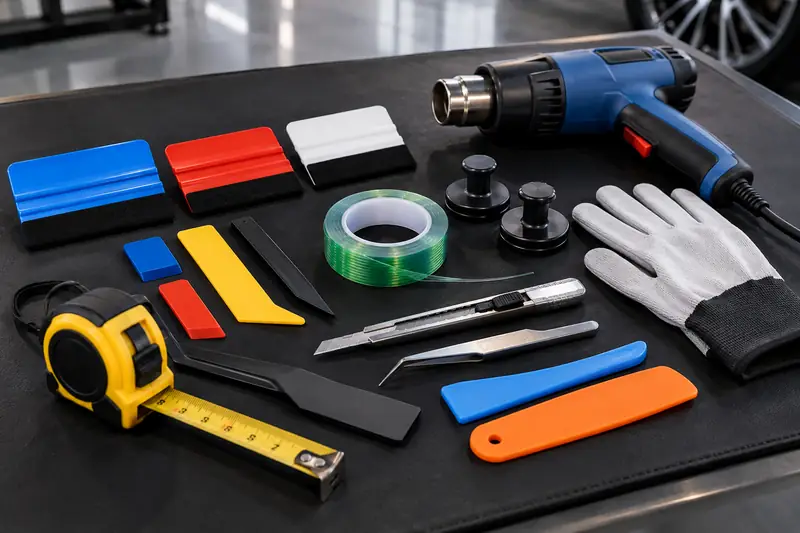
DIY wrap tool list
| Tool | Purpose |
|---|---|
| Felt-edge squeegee | Lays film without scratching |
| Wrap gloves | Lets you glide film by hand without fingerprints |
| Snap-off blade knife (30° or 60°) | Precise trimming |
| Knifeless tape | Cuts film on the car without a blade on paint |
| Heat gun | Softens film for stretching and post-heating |
| Infrared thermometer | Checks post-heat temperature |
| Magnets | Holds film in place while positioning |
| Isopropyl alcohol and clay bar | Surface prep |
Our wrap tools range includes squeegees, knives, tapes and full kits, and the vinyl wrap tools guide explains each one.
How to wrap a car: step-by-step installation
Installing vinyl wrap on a car follows the same core steps whether you are a beginner or a pro.
- Wash and decontaminate. Wash thoroughly, clay the paint and remove wax, sealant and grease.
- Remove hardware. Take off badges, handles, lights and trim where practical so you can wrap edges properly.
- Final wipe. Clean every panel and edge with isopropyl alcohol just before applying film.
- Measure and cut. Cut each panel with extra margin — typically several centimeters on each side.
- Glass the film. Lay the film over the panel with light, even tension so it sits flat without touching in the middle.
- Squeegee from the center out. Use overlapping strokes; air-release adhesives let small bubbles escape.
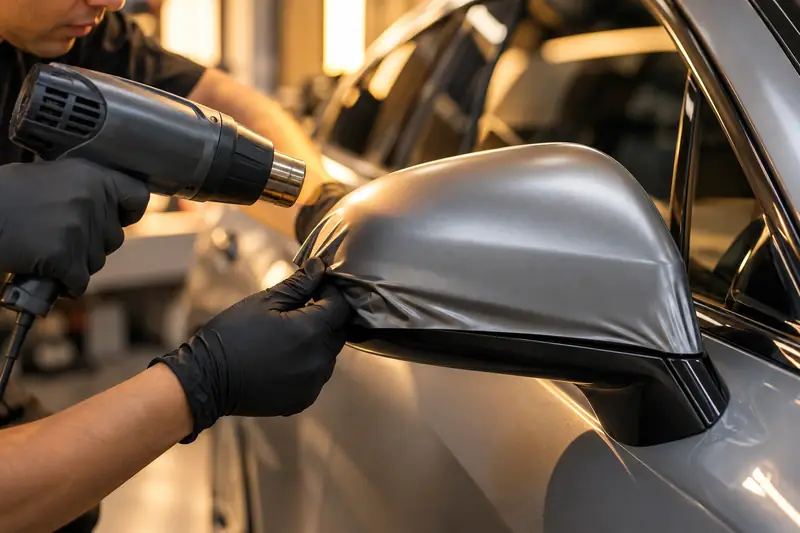
- Work curves with heat. Warm the film to soften it, stretch gently into recesses, and avoid overstretching, which thins color and causes failure.
- Trim and tuck edges. Use a sharp blade or knifeless tape, leaving enough film to wrap around edges.
- Post-heat. Heat all stretched areas, recesses and edges to the temperature on the film's data sheet — often around 90–100 °C (195–210 °F) for cast film — so the film does not shrink back.
- Reassemble and inspect. Reinstall hardware, check every edge, and let the car rest in a warm space before driving if possible.
Roof wrap installation
A roof is a large, mostly flat panel and a good first project. Two people make it far easier: one on each side to glass the film. Watch the edges around rails, antennas and sunroof seals, and post-heat well because roofs get the most sun.
Vinyl wrap bumpers and chrome bumpers
Vinyl wrap for bumpers
Bumpers are the hardest part of most wraps because of deep recesses, vents and sensors. Common techniques:
- Use inlays (separate pieces) in very deep recesses instead of overstretching one sheet.
- Plan seams where they will be hidden by body lines.
- Pre-stretch film lightly with heat before laying it into recesses.
- Post-heat recesses thoroughly — this is where lifting usually starts.
Can you wrap chrome bumpers?
Yes, chrome bumpers can be wrapped, but chrome is a smooth, low-energy surface that resists adhesion. To improve results:
- Clean thoroughly and remove any wax or polish.
- Lightly scuff the chrome with a fine abrasive pad, then clean again.
- Use an adhesion promoter on edges and tight areas, as appropriate for the film.
- Wrap with a conformable cast film and post-heat carefully.
Chrome vinyl wrap on a bumper — wrapping a painted bumper in chrome film — is also popular, but chrome film is less forgiving than standard colors and shows every flaw. Our chrome vinyl wrap guide covers the technique.
Fleet wrap installation
Fleet vehicle wraps installers work at scale, so consistency matters more than perfection on one car. Good practice:
- Use an accurate template for each vehicle model and verify on the first vehicle.
- Pre-label printed panels by vehicle and position.
- Schedule vehicles in batches and work in teams.
- Keep the same film batch across a fleet so colors match.
- Document each vehicle with photos for warranty purposes.
Vehicle wrap training and certification
Learning how to wrap cars is faster with structured training. Options include:
- Hands-on courses run by training centers and film suppliers, typically lasting a few days.
- Manufacturer-specific certifications that confirm an installer knows a particular film line's technique. Some film makers require certified installers for their longest warranties.
- Shop apprenticeships, which are often the most thorough way to learn.
- Online videos and practice panels to build basic skills before a course.
Vehicle wrap certification or car wrap certification is not usually a legal requirement, but it helps customers trust a new installer. When choosing certified vehicle wrap installers, look at their portfolio and warranty as well as their certificates.
Buying film and tools for installers
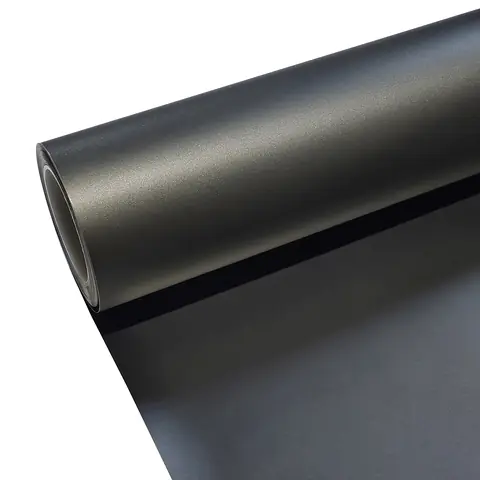
Consistent film behavior makes training faster and installs more predictable. Mars Decorative Film produces PVC vinyl wrap with air-release adhesive in 1.52 m wide rolls, and supplies matching wrap tools. MOQ is one roll, so new installers can order mixed practice colors. Free A4 samples are available to qualified buyers.
Frequently asked questions
Can you wrap a car yourself?
Yes, with patience, practice and the right tools. Start with flat panels like the roof or hood, budget extra film, and consider leaving complex bumpers to a professional.
Can you wrap chrome bumpers?
Yes. Clean the chrome thoroughly, lightly scuff it, use an adhesion promoter where needed, and post-heat carefully. Adhesion is harder than on paint, so careful prep is essential.
What are typical vehicle wrap installation rates?
Labor for a full car color change typically runs about $1,500–$4,000 in the US. Commercial graphics are often priced at roughly $5–$15 per square foot for installation. Rates vary by region, vehicle and shop.
How long does car wrap installation take?
A professional usually needs about 2–5 working days for a full car, including prep, disassembly, wrapping and post-heating. Complex vehicles and specialty films take longer.
Do you need certification to wrap cars?
Usually not as a legal requirement. Certification shows customers that an installer has trained on a film line's technique, and some film makers require it for their longest warranties.
What is the hardest part of wrapping a car?
Bumpers and mirrors are usually the hardest because of deep recesses and compound curves. Using inlays and thorough post-heating prevents most failures in these areas.