Vinyl wraps · 7 min read
Motorcycle wraps: materials, design ideas, cost and install tips
Motorcycle wraps explained: which vinyl wraps bikes best, custom design ideas for Harley and sport bikes, film quantities, cost ranges and install tips.
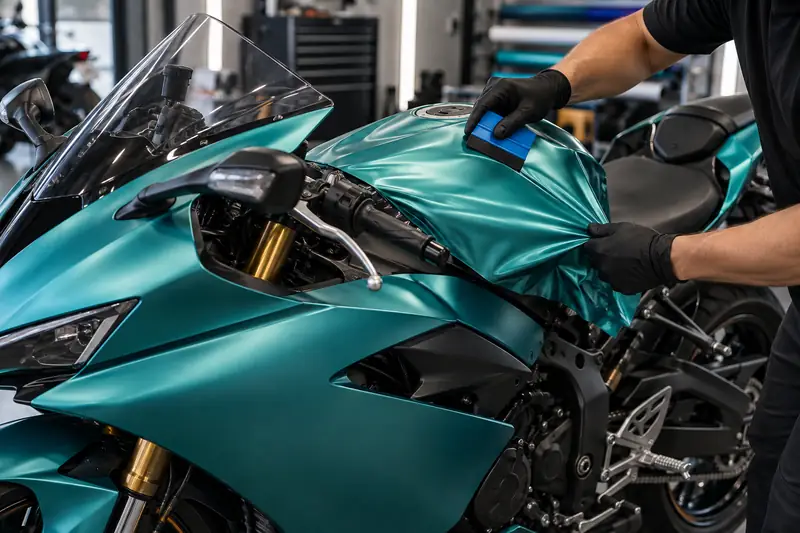
Short answer: Yes, you can wrap a motorcycle. Tanks, fairings, fenders and side covers take vinyl well, using conformable cast or PET-liner film for curves and printed vinyl for custom graphics. Most bikes need roughly 1–4 meters of 1.52 m film. Avoid exhausts and other hot parts, and protect the tank from fuel spills.
Motorcycle wraps change a bike's look for a fraction of the cost of paint, and they come off cleanly when it is time to sell. Bikes are a different job from cars, though. The panels are small but tightly curved, parts get hot, and fuel and boots hit the tank. This guide covers which vinyl works best on motorcycles, design ideas, how much film to order, typical costs and installation tips. It is aimed at wrap shops adding bike work and at riders planning a custom motorcycle wrap.
Key takeaways
- You can wrap a motorcycle's painted plastic and metal panels: tank, fairings, fenders, side covers, tail sections and some wheels.
- Conformable cast PVC or PET-liner vinyl handles compound curves best. Printed vinyl with laminate is the standard for custom graphics.
- Most bikes need roughly 1–4 m of 1.52 m wide film, depending on how much bodywork the bike has and whether you wrap removed panels.
- Do not wrap exhausts, heat shields or engine cases. Vinyl is not made for those temperatures.
- Remove panels when possible. It is faster, gives cleaner edges and avoids cutting near paint.
Can you wrap a motorcycle?
Yes. Any smooth, painted surface that stays within normal outdoor temperatures can be wrapped. On most bikes that means:
- Fuel tank and tank covers. This is the most common motorcycle wrap job.
- Fairings. Full fairings on sport and touring bikes, or the headlight cowl on naked bikes.
- Front and rear fenders.
- Side covers and tail sections.
- Bags and saddlebags on touring bikes, if painted.
- Wheels, with a rim stripe or full wheel wrap. Some shops avoid full wheels because of brake heat and tire changes.
Leave out exhausts, heat shields, engine cases and anything near the cylinder heads. Very rough or textured plastic does not hold vinyl well either. Seats need upholstery material, not wrap film.
Best vinyl wrap for motorcycle work
Motorcycle panels are small but full of compound curves: tank knee recesses, fairing vents, tight fender returns. The film has to stretch without shrinking back or thinning out the color.
| Film type | Strengths on bikes | Limits | Good for |
|---|---|---|---|
| Cast PVC vinyl (air-release) | Very conformable, stays put in recesses, wide color range | Higher cost than calendered | Full color changes on tanks and fairings |
| PET-liner vinyl | Smooth, paint-like gloss, low orange peel | Gloss shows every dust speck and stretch mark | Show bikes and high-gloss color changes |
| Calendered PVC vinyl | Lower cost | Tends to shrink back on deep curves | Flat side covers, stripes, accents |
| Printed vinyl with laminate | Any design, logos, race graphics | Needs printing and laminating | Custom motorcycle graphics wraps |
| Effect films (carbon, chrome, color shift) | Strong accents | Chrome is harder to stretch evenly | Tank tops, fairing accents, details |
| Color or clear PPF (TPU) | Protection from chips, boot scuffs, fuel spills | Installed wet; costs more per meter | Tanks, fairing leading edges |
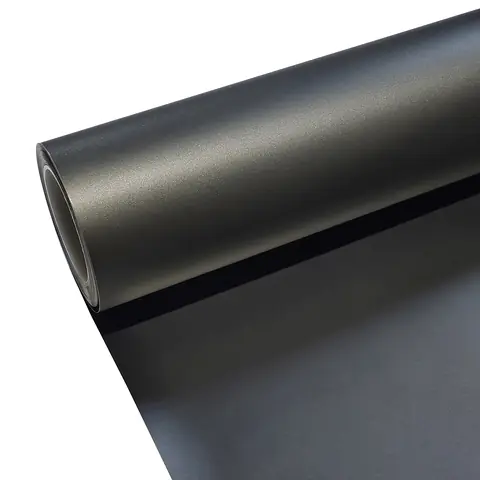
For the material background, see our comparison of TPU, PET and PVC wrap films. On a motorcycle, the deciding factors are conformability and finish. A cast or quality PVC vinyl wrap in satin or matte is the most forgiving starting point for shops new to bikes. PET liner vinyl gives the closest result to fresh paint in gloss colors.
Protecting the tank
Fuel spills, tank bags and riding gear are hard on a tank. Many shops add clear or color PPF on the tank top and knee areas, or use a tank pad. Wipe up fuel spills promptly. Fuel and solvents can soften vinyl and its adhesive if they sit on it.
Motorcycle wrap ideas and designs
Custom motorcycle wraps fall into a few styles:
- Solid color change. Satin black, gloss white, flat cement grey or a deep metallic. These are simple, clean and easy to repair panel by panel.
- Two-tone and stripes. A tank and fairing in one color, with racing stripes or a contrasting tail.
- Race replica and livery graphics. Printed numbers, sponsor-style layouts and bold geometric shapes. Printed vinyl handles these best.
- Effect accents. A carbon fiber tank top, chrome or color-shift stripes, or a matte body with gloss details.
- Camo and pattern wraps. Popular on ATVs, side-by-sides and adventure bikes.
Harley motorcycle wraps
Harley-Davidson and other cruisers usually have less bodywork: tank, fenders, side covers and maybe a fairing and bags. That makes Harley motorcycle wraps a good fit for flames, pinstripe-style graphics, two-tone tanks and vintage liveries, often in gloss PET-liner or printed vinyl. Deep fender curves and chrome trim edges call for careful relief cuts and heat.
ATV wraps
ATV and UTV vinyl wraps go on large plastic panels that take a lot of mud, brush and pressure washing. Thicker printed graphics kits with a tough laminate are the norm. Camo, team colors and bright high-visibility designs are common. Our printed and effect vinyl range includes camo, carbon and color-shift films for this kind of work.
How much vinyl do you need to wrap a motorcycle?
Film usage depends on the bike and how much bodywork it has. With 1.52 m (5 ft) wide rolls, typical ranges are:
| Bike type | Typical coverage | Approximate film needed |
|---|---|---|
| Naked or standard bike | Tank, side covers, small cowl, fenders | About 1–2 m |
| Cruiser | Tank, fenders, side covers | About 1.5–2.5 m |
| Full-fairing sport bike | Full fairings, tank, tail | About 2.5–4 m |
| Touring bike with bags | Fairing, tank, fenders, saddlebags | About 3–5 m |
| ATV / quad | Front and rear plastics | About 2–4 m |
Add a margin for test pieces and mistakes, especially on your first bike of a model. For cars, our guide to how much vinyl to wrap a car includes a calculator.
How much do motorcycle wraps cost?
Prices vary by region, bike and shop. In most US markets, rough ranges are:
- Tank only: often a few hundred USD.
- Naked bike or cruiser, all painted parts: roughly $500–1,500.
- Full-fairing sport or touring bike: roughly $1,000–2,500 or more.
- Custom printed graphics: design time, printing and laminating add to the cost.
Disassembly is a large share of labor. A sport bike with many fairing fasteners takes longer than a cruiser.
How to wrap motorcycle panels: install tips
- Remove panels where possible. Tanks, fairings and fenders are far easier on a bench.
- Clean thoroughly. Wash, decontaminate, then wipe with isopropyl alcohol. Clean the panel edges and backs too, where the film wraps around.
- Plan the seams. Choose seams along body lines or under trim. Small, deep panels may need inlays.
- Cut generous pieces. Leave enough film to grab and to wrap around edges.
- Glass out the film. Heat and stretch it over the panel so it lies with even tension before squeegeeing down.
- Work recesses with heat. Use gentle heat and short stretches in knee recesses and vents. Avoid overstretching, which thins the color and causes lifting.
- Wrap the edges. Fold film around the back of panel edges where possible.
- Post-heat everything. Post-heat all stretched areas, recesses and edges to the temperature on the film's data sheet. For cast film this is often around 90–100 °C (195–210 °F).
- Reassemble carefully. Make sure fasteners do not tear film around mounting holes.
A heat gun for vinyl wrap and a good squeegee and knife set matter even more on small, tight panels.
Finding a motorcycle wrap shop
Not every car wrap shop takes bikes. When choosing a motorcycle wrap shop, ask:
- Whether they remove panels or wrap on the bike.
- How they handle seams and edges, especially around the tank.
- Which films they use and whether they offer PPF on the tank.
- To see photos of bikes similar to yours.
Buying film for bike work
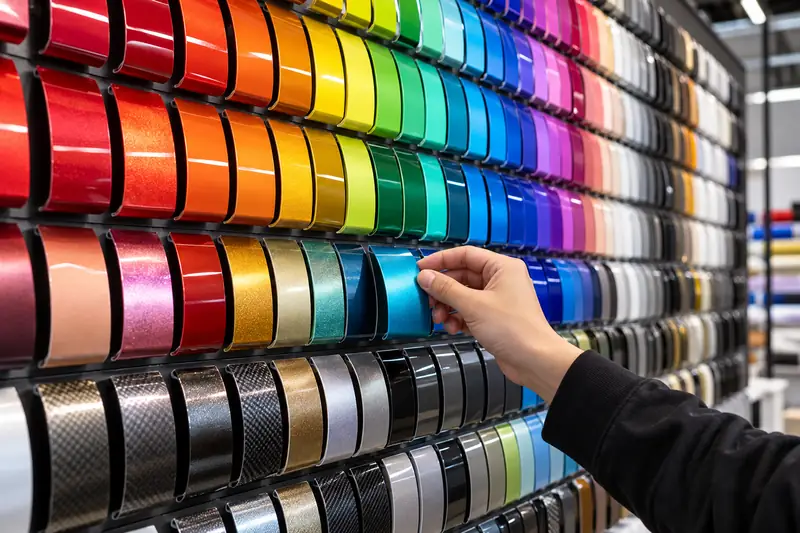
Bike jobs use short lengths of many colors, so a supplier that sells single rolls in mixed colors helps keep stock under control. Mars Decorative Film ships from one roll, with standard 1.52 m wide rolls. Qualified shops can request free samples to test stretch on a real tank before committing.
Frequently asked questions
Can you wrap a motorcycle?
Yes. The tank, fairings, fenders, side covers and painted bags can all be wrapped with vinyl. Avoid exhausts, heat shields and engine parts, which get too hot for wrap film.
What is the best vinyl wrap for a motorcycle?
Conformable cast PVC or PET-liner vinyl works best on the tight compound curves of tanks and fairings. Printed vinyl with laminate is best for custom graphics. Many shops add clear PPF on the tank for protection against scuffs and fuel spills.
How long do motorcycle wraps last?
Quality vinyl on a motorcycle typically lasts several years, depending on the film grade, sun exposure, storage and care. Garaged bikes generally keep their wraps longer than bikes parked outside year-round. Tanks wear faster where riders' knees and gear rub.
Can you wrap a motorcycle tank?
Yes. The tank is the most commonly wrapped part. Removing it makes the job easier, and deep knee recesses need careful heat and stretching. Wipe fuel spills off quickly, and consider PPF on the top and sides.
How much does it cost to wrap a motorcycle?
In most US markets, a tank wrap typically costs a few hundred dollars. Wrapping all painted parts of a naked bike or cruiser runs roughly $500–1,500, and a full-fairing sport or touring bike can run $1,000–2,500 or more. Prices vary by region, bike and design.
Can you wrap an ATV?
Yes. ATV wraps usually use thicker printed vinyl with a tough laminate over the plastic body panels. Clean the plastic thoroughly, and post-heat edges well, because ATVs take a lot of mud and pressure washing.