Vinyl wraps · 8 min read
Carbon fiber wrap guide: types, colors, hoods, interiors and price
Carbon fiber wrap explained: 3D vs gloss vs forged carbon vinyl, black, white and red options, hood and dash wraps, roll sizes and typical prices.
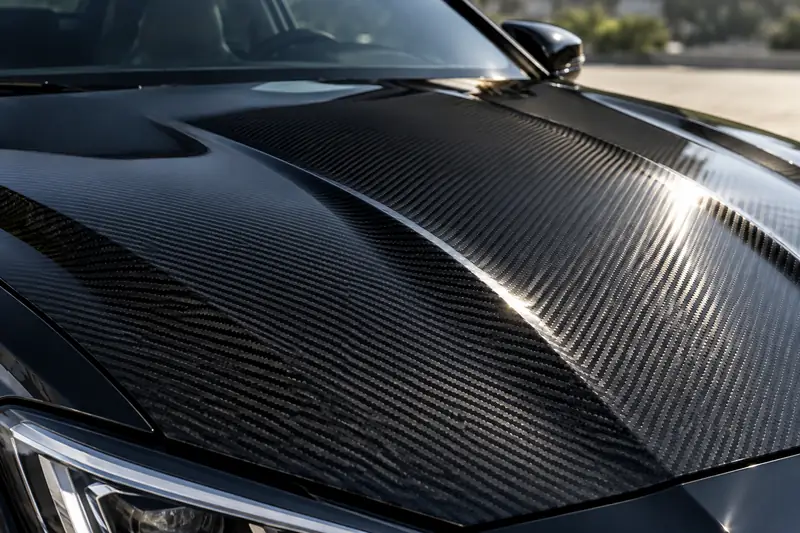
Short answer: A carbon fiber wrap is a vinyl film with a printed or embossed carbon weave pattern that copies the look of real carbon fiber at a fraction of the cost. Textured 3D films feel like woven carbon, gloss carbon films look like lacquered parts, and forged carbon films copy the marbled pattern of pressed carbon.
A carbon fiber wrap is one of the most requested accent jobs in any wrap shop: hoods, roofs, mirrors, spoilers and interior trim. It gives the racing look of carbon composite without the cost or weight change of real parts. This guide is for installers, distributors and car owners who want to know which type of carbon fiber vinyl wrap to choose, how it installs, which colors sell and what it typically costs.
Key takeaways
- Carbon fiber vinyl comes in three main styles: textured 3D (embossed weave), gloss carbon (printed weave under a clear glossy layer) and forged carbon (marbled chopped-fiber pattern).
- Black is the volume seller; white carbon fiber, red carbon fiber and other colors work well for accents and interiors.
- The weave has a direction. Panels that sit next to each other need the pattern running the same way, so plan layout before cutting.
- Standard rolls are 1.52 m (5 ft) wide, which covers most hoods and roofs in one piece.
- A vinyl hood wrap typically costs a small fraction of a real carbon fiber hood, and it is removable.
What is a carbon fiber wrap?
Real carbon fiber is a composite: woven carbon cloth or chopped fiber set in resin, then cured and clear-coated. The weave you see is the actual structure of the part. A carbon wrap copies that look with a self-adhesive film, usually PVC with an air-release adhesive, so it can be applied over existing paint or trim and removed later.
There are three ways manufacturers create the effect:
| Type | How the look is made | Feel | Best use |
|---|---|---|---|
| Textured 3D carbon | Weave pattern embossed into the film surface | Ridged, like dry carbon cloth | Budget accents, interior trim, mirrors |
| Gloss carbon (often sold as 4D, 5D or 6D) | Printed weave under a thick clear gloss layer | Smooth, glassy | Hoods, roofs, spoilers, a "real part" look |
| Forged carbon | Printed marble-like pattern of chopped fibers | Smooth gloss or satin | Modern performance look, interiors |
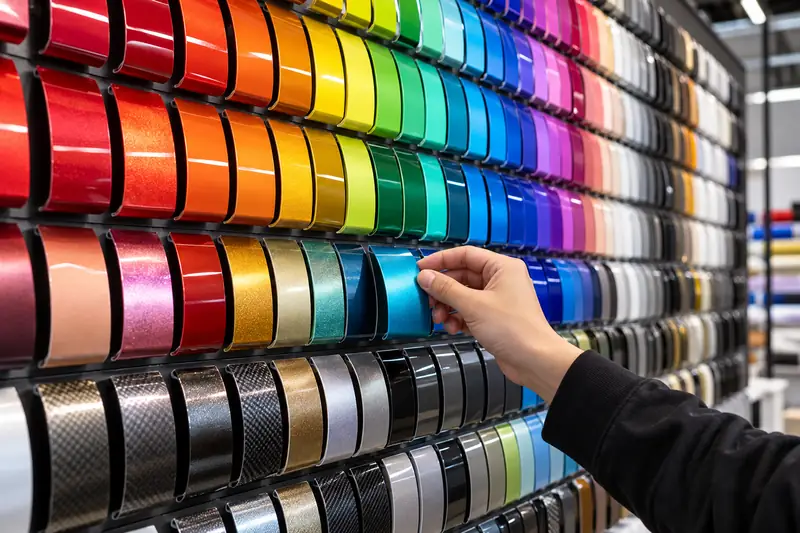
| Colored or effect carbon | Tinted weave, color flake or metallic base | Varies | White, red, blue carbon accents |
The "D" numbers are naming conventions, not a technical standard. Compare samples in your hand rather than trusting the label. Most carbon films sit in our printed and effect vinyl range, next to chrome, camo and color shift films.
Twill weave carbon fiber vs plain weave
Twill weave carbon fiber, where the fiber bundles run over two and under two, gives the familiar diagonal pattern most people picture. Plain weave looks like a tight checkerboard. Twill is the more popular choice for automotive work because it reads as "carbon" from a distance. Some films also mimic a carbon and aramid hybrid weave, often with gold or yellow strands mixed into the black.
Carbon fiber car wrap: which parts to wrap
Full-car carbon wraps exist, but most carbon wrapping on cars is an accent:
- Hood: the most common job. A carbon fiber hood wrap (or bonnet carbon fibre wrap in UK terms) changes the car's look fast.
- Roof: a gloss black carbon roof pairs well with any body color and hides roof wear.
- Mirrors, spoilers, diffusers and side skirts: small parts, low film use, high visual impact.
- Interior: carbon fiber dash panels, console trim, door inserts and steering wheel trim.
- Motorcycles: tanks, fairings and fenders.
Carbon fiber hood wrap
A hood is the best test of an installer's carbon work. The weave makes any stretch or distortion obvious, so:
- Clean and decontaminate the hood, then wipe with an isopropyl alcohol mix.
- Lay the film so the weave runs straight along the car's centerline.
- Glass the film out evenly and work from the center outward, avoiding heavy stretch on the flat areas.
- Use a little heat on the edges and recesses only, and keep stretch low so the pattern does not distort.
- Wrap the edges, trim with a sharp blade or knifeless tape, and post-heat all stretched areas as the film's data sheet specifies.
Gloss carbon films are thicker and slightly stiffer than ordinary color vinyl, so they need patience in deep recesses. Textured 3D films hide minor surface flaws better. For a full-car workflow, see our guide on how to wrap a car.
Carbon fiber inside the car
Interior trim is where carbon film pays off for both DIY owners and shops. A carbon fiber dashboard or console wrap can be done in an afternoon. Prepare carefully: interior plastics often carry dressings and silicone, so degrease well and test adhesion on a hidden spot. Textured plastics may need a primer or adhesion promoter. Keep film away from airbag seams and deployment lines.
Carbon fiber colors: black, white, red and more
| Color | Typical customer | Pairs well with |
|---|---|---|
| Black carbon fiber | Mainstream, performance look | Any body color |
| Gloss black carbon | Owners wanting a real-part look | White, grey, silver, red cars |
| Forged carbon | Modern, high-end look | Dark or bright solid colors |
| White carbon fiber | Show cars, interior accents | Black or dark cars, white cars for a subtle texture |
| Red carbon fiber | Sporty accents, mirrors, trim | Black, white or grey cars |
| Blue, silver, gold carbon | Niche, motorsport style | Matching livery or wheel colors |
Black covers most of the volume, so distributors usually stock deep in black 3D, gloss and forged, then carry a few color carbons for accents. A red carbon fiber wrap on mirrors and a lip spoiler is a typical quick upsell.
How much is carbon fiber? Real parts vs vinyl wrap
"How much is carbon fiber" usually means one of two things: the price of a real carbon part, or the price of the wrap.
| Option | Typical price range (USD) | Notes |
|---|---|---|
| Real carbon fiber hood (aftermarket) | Often several hundred to a few thousand dollars | Depends heavily on make, quality and finish |
| Carbon fiber hood wrap, installed | Roughly $150–$500 | Varies by shop, hood size and film type |
| Roof wrap in carbon, installed | Roughly $200–$500 | Panoramic roofs and rails add time |
| Interior trim kit wrap, installed | Roughly $150–$600 | Depends on number of pieces |
| Full car in carbon, installed | Often $2,500 and up | Labor-heavy because of pattern alignment |
All prices vary by region, vehicle and shop, so treat them as a starting point for a conversation, not a quote. Real carbon fiber price includes material, molds and curing; the wrap is mostly labor plus a modest amount of film. For broader pricing, see our car wrap cost guide.
Carbon fiber roll sizes and price
A carbon fiber roll in the trade is typically 1.52 m wide, sold in full rolls (around 17–18 m) or shorter lengths for retail. Gloss carbon and forged carbon films usually cost more per meter than textured 3D, which reflects the extra print and gloss layers. A hood typically needs around 1.5–2 m of film depending on size and layout. Shops buying for volume should compare cost per job rather than per meter: a film that installs faster with less waste often wins.
Note that "carbon fiber mat" and carbon cloth are materials for building real composite parts, not wrap films. If a customer wants a true lightweight part, that is a fabrication job, not a vinyl job.
Carbon fiber stickers and small accents
Carbon fiber sticker sheets and pre-cut pieces are popular for door sills, key fobs, pillars and badges. Shops often cut these on a plotter from offcuts, which is a good way to use the remainder of a roll. Choose a film with a stable adhesive and a smooth surface for cut graphics; very deep textured films are harder to weed in small details.
Buying carbon fiber vinyl for your shop
When evaluating carbon films, check how straight the weave runs across the roll width, how the gloss layer behaves in recesses, and whether the pattern matches from one batch to the next. At Mars Decorative Film, carbon films are inspected roll by roll for pattern and gloss defects, and each roll carries a batch number so repeat orders stay consistent.
Shops can start with a mixed-color order from one roll, and qualified buyers can order free samples of textured, gloss and forged carbon to compare side by side. For solid gloss accents to pair with carbon, look at our PET liner vinyl wrap range.
Frequently asked questions
How much is carbon fiber wrap compared with a real carbon hood?
A vinyl carbon fiber hood wrap typically costs a few hundred dollars installed, while a real aftermarket carbon hood often costs several times that or more. Prices vary by vehicle and region. The wrap is also removable, which helps on leased cars.
What is the difference between 3D and gloss carbon fiber vinyl?
3D carbon vinyl has an embossed texture you can feel, like dry woven carbon. Gloss carbon has the weave printed under a thick clear gloss layer, so it looks more like a lacquered real part. Gloss carbon usually costs more and is slightly stiffer to install.
What is forged carbon fiber wrap?
Forged carbon wrap copies the marbled, chopped-fiber look of pressed carbon parts instead of a regular weave. It is popular on interiors, mirrors and spoilers. Because the pattern is random, seams and alignment are a little more forgiving than with twill weave.
Can you wrap a dashboard in carbon fiber?
Yes. Carbon fiber dashboard and trim wraps are common. Degrease the plastic thoroughly, test adhesion on textured surfaces, use an adhesion promoter if needed, and never cover airbag seams or deployment areas.
How long does a carbon fiber wrap last?
Exterior life depends on film grade, climate and care. Horizontal surfaces such as hoods and roofs take the most sun and usually age first. Check the durability rating on the specific film's data sheet and keep the wrap clean.
Does carbon fiber wrap damage paint?
A quality wrap on healthy factory paint normally removes cleanly within its rated life when removed with gentle heat. Resprayed or poorly prepared paint can lift with the film. Ask about the paint's history before wrapping.
Is white carbon fiber wrap hard to keep clean?
White carbon shows dirt in the texture more than black, especially on textured 3D films. A gloss white carbon is easier to wash. Regular hand washing with a pH-neutral shampoo keeps it looking fresh.